
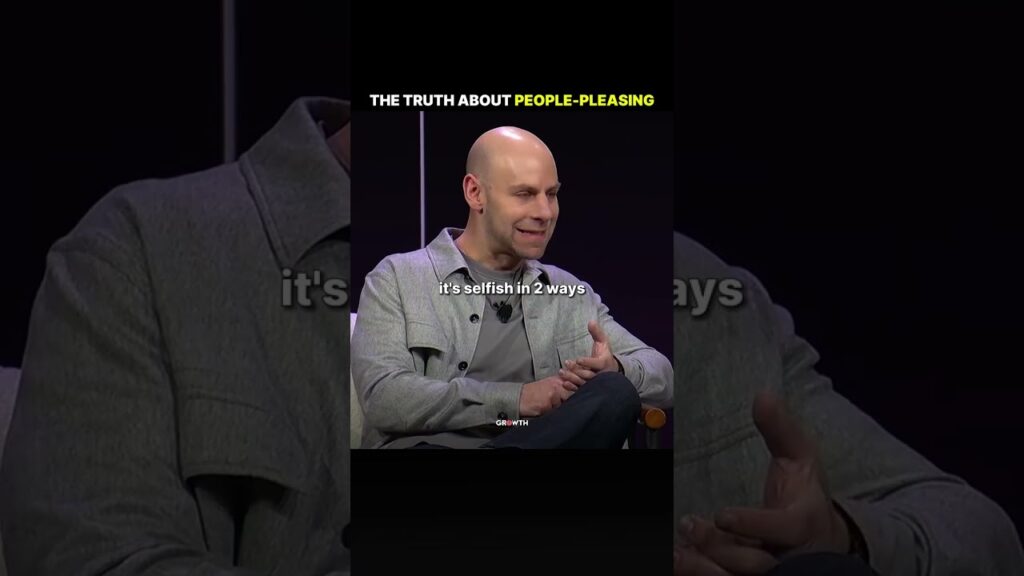
The Truth About People-Pleasing.
The Truth About People-Pleasing.
This clip explains people pleasing better than most psychology books do because it shows how irrational it feels in real time. He did not want extra cream. He knew he did not want extra cream. He rehearsed the sentence over and over in his head. But the fear of slightly inconveniencing another person became stronger than his own needs. That is why people pleasing becomes exhausting over time. You start managing everyone else’s emotional comfort while silently abandoning your own. The scary part is that it can happen in tiny everyday moments so often that it starts to feel normal. Eventually you stop asking yourself what you actually want and start asking what version of you will make everyone else comfortable. That is not kindness. That is survival mode disguised as politeness.
Speaker: Kristen Bell
#discomfort #peoplepleasing #emotionalpatterns
20 Comments
1 cream please 💩🤣🤣
1st comment brotha will you pin me ❤
🫢😐😞
It’s funny that of anyone the Hollywood behind the scenes gossip was she is a miserable person few years later she’s out doing PR for being a people pleaser
This what happens when you grow up privileged. Im an empath and suffer from what shes talking about. It stops when you have to struggle. Not completely. But you learn to put that shih aside
I disagree that its selfish. Its a trauma response. Calling it selfish is judgmental and ignorant.
People pleasing feels like kindness until you realize it is costing you honesty, peace, and self-respect. The right people do not need you to abandon yourself to keep their approval.
“Empath” is a bullshit term.
You don’t have physic abilities, you just get triggered by seeing those around you in bad or uncomfortable positions and feeling the compulsion to act. While on the surface it sounds pleasant, it’s really just a trauma response your brain makes that causes a person’s nervous system to treat their problem as your own and get in their feelings about problems they often know very little about.
I can’t even tell you how many “Empaths” came into my life not realizing I was chronically disabled. Like a switch once they do realize it, suddenly I’m treated like a sad puppy while I’m completely content with my position.
They don’t feel the pain of anyone, they just act out of their own need to no longer feel bothered by others existing in any sort of pain around them that brings them back to whatever trauma made them think they needed to be hyper vigilant to shifts in mood.
If true empaths exist, we’d be seeing much more radical humanitarianism efforts within the world. The reality is your trauma makes you hyper alert and the need to help isn’t empathy at all, sure empathy can play a role, but the primarily response is to attempt to get rid of a trigger that’s bothering yourself.
It’s just a feel good term that makes people feel validated in continuously throwing themselves under the bus for the sake of others, while it actively harms them and shouldn’t be treated as a good thing.
If you’re not mentally healthy, you neee to work on yourself before you can reach out and help others. If your discomfort is projected into others then you’re still only doing it for yourself. Like he said, it’s selfish.
But having empathy and “being an empath” have widely different reasons behind them, one is truly helpful while the other is actively harmful to yourself.
How many times can a person use the word ‘like’ out of context?
His first point is ridiculous.
calling it selfish is just fighting fear with more fear
It's not selfish.
What she said at the end … 100% me …
Your energy introduces you before you speak. Heal it, protect it, elevate it!🌟🙏
I'm far from being a "people pleaser" but I have similar behaviour because of the fear of confrontation. Is it the same thing?
I people please. I understand this completely and can relate. If you please you’ll always people please as a default – you have to be uncomfortable and not when it’s called for. For those that aren’t a pleaser they can not understand (my wife) I envy that in her big time. Being married to her alone has allowed me so much growth.
These are YES people they don't know how to say no. Yet there are NO people that are the opposite that are, Like her, have a hard time getting out of that. Yet society treats them badly by calling them Karens that only pushes them to stay they way they are. Seeing it safer than being a YES person submitted to the desires of others 🐑 🐏 🐑
❤️❤❤
usually people pleasers grew up in homes where they were not seen- or really heard, and so they had to get parents' approval and attention by mirroring and pleasing the parents. Then they go on to never really have their own voice – and often getting into relationships with narcissistic people
"People pleaseing is selfish" Dude, fuk off! It could also be a survival trait people develop to withstand childhood trauma!