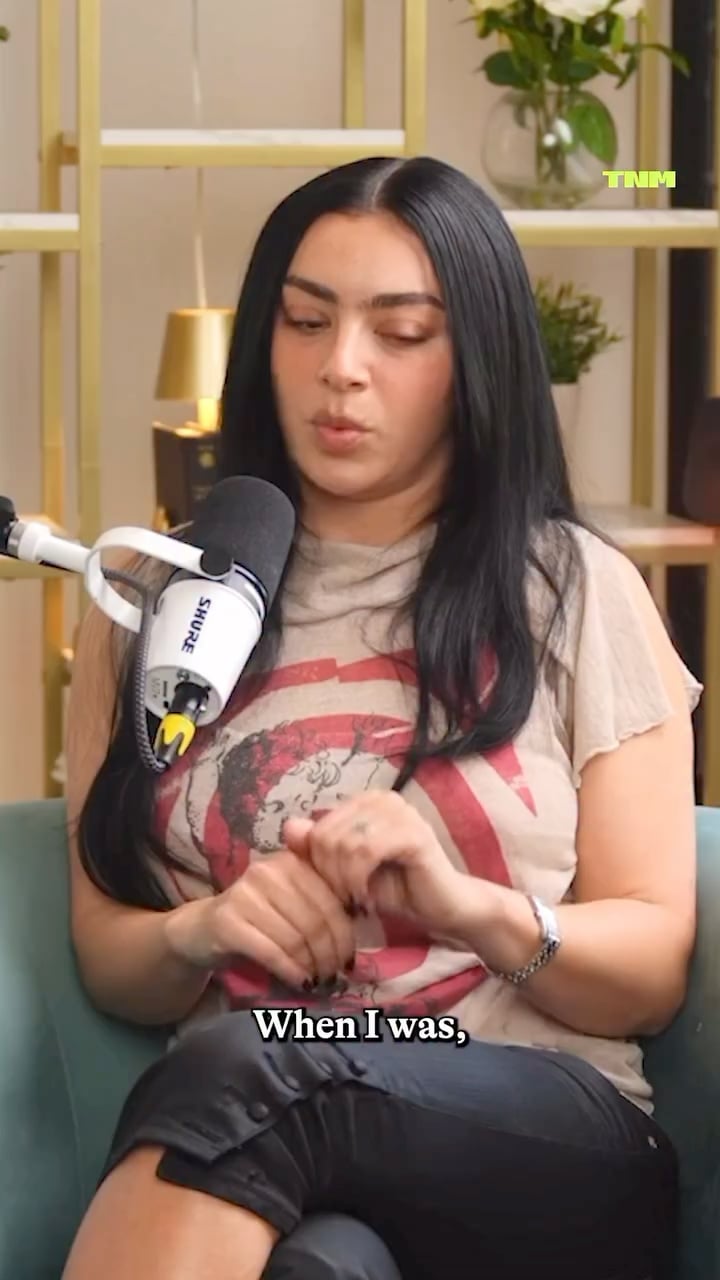
I’m mixed and I really relate to Charli’s childhood experiences here (especially the struggle of “which side am I on?”). Props to the interviewer for asking her this question because this might be the first time I’ve ever seen Charli speak about her Indian side.
I wish she would lean into it more, assuming her image would let her do that
reasonableratio on
She somehow seems very uncomfortable talking about this topic ?? Which could be for any number of reasons so no judgement. Just observation
As a half Asian person I’ve been lucky enough to grow up pretty steeped in the Asian side of my family and something about watching this makes me feel very grateful for the strong positive relationship I have with my Asian side
wanderrslut on
I love that she’s speaking on it. As a half-Asian, I completely understand where she’s coming from. There’s also invisibility that comes with being half-Asian if you’re not half white or half East Asian.
firesticks on
Fellow Windian, about a decade older than her.
This is very relatable. I was either the white cousin or the Indian cousin with extended family. I always identified more as mixed than either of my ethnicities, and related more to fellow mixed people.
You don’t see yourself or your experiences portrayed in media, and we’re often erased by either being cast as one or the other, or our point of view unaccounted for in actual portrayals.
That said, everyone concern trolls as though mixed kids have this huge identify crisis. Yes, we don’t have an identity in the same way as others, but we our own that is sort of both at once and something else. It would be nice to have that unique experience represented and acknowledged.
premonitioning on
as someone who is also white passing mixed race in the UK, it’s a really difficult topic to kind of talk about because a lot of us realise that we have a certain amount of privilege that aren’t afforded to non-white people in the UK, but we still faced discrimination once people find out your background, and you still watched closed members of your family face discrimination? there’s that level of “I didn’t have it as bad as others” guilt. but then we still get shit for being non-white, non-British people?
I totally get her hesitation and difficulty in choosing her words when talking about this
EvenPossible5918 on
I didn’t know she was biracial.
RiRambles on
I didn’t know she was half Indian. It turns out her mum is from a Muslim gugarati family, same as me! That’s exciting. Bless, it can’t have been easy being in two worlds.
irockyoursocksofff on
As a mixed indian person, I understand where she is coming from
sabhall12 on
This is something that people can relate to in the UK, and something that isn’t really talked about in mainstream spaces. I don’t have much connection to my heritage and have been pushed away by people because I’m not their version of that heritage. I speak too posh, I hold myself differently, I am not exactly like some of these people and so I am judged for it.
iammissx on
My children are the same heritage as charli – half Gujarati half British. It’s really hard for them- we go to the mandir and people stare. Or if they wear Indian clothes- people stare. And it’s almost always positive like ‘wow beautiful clothes’ or people being friendly at the mandir but it’s just attention my children don’t want.
It’s very hard trying to protect them whilst also celebrating both cultures/religions/race. Because to embrace both sides means that they don’t belong to either. It’s really hard.
Rettider123 on
Yeah, in my experience as a half Asian person, it can be awkward talking about the topic for me because my Asian side of the family has no solid ties to our culture, traditions, or even our distant relatives out of the States. This was largely due to my grandparents’ desire to assimilate into American culture as quickly as possible, so we weren’t even taught a second language, just English, and then they passed away quickly as well, so their kids were raised without knowing much of their parent’s culture and then were raised by relatives who also focused on assimilation.
I was basically raised in an environment that encouraged me to be as close to my white side as possible. The community I grew up in was majorly white as well (90+%).
As an adult now, there’s lingering feelings of shame in not being able to easily engage in the language or other parts of the culture. And it all stems from family decisions that were outside of my control.
I started fully realizing this dynamic in my early 20s. Lately I’ve been pestering my mom and other relatives to start applying for the dual citizenship they’re entitled to! It’s only the first of many steps for them, but hopefully, from this, we’ll be able to get in touch with our distant relatives and culture more.
momosuna on
i feel like being white passing makes it extremely hard to embrace let alone play up your nonwhite side in public, or for promo as the host said many artists do! i’ve always appreciated that she doesn’t do that. as an indian american i always knew she was half indian half british white & think her features are super indian actually lol but i do like the way she’s spoken about it in the past as well, she’s really cautious to not offend anyone & always tries to articulate how the mixed kids’ experience is very different
NoDryHands on
I’ve never thought about this topic too much, but it must be so difficult to experience that feeling of not being able to claim your own roots.
My own heritage and background is such a huge part of who I am. I can’t imagine how isolating it would feel to feel that you don’t really fit in to your place(s) of origin and aren’t accepted into either culture.
Apprehensive-Quit353 on
I had no idea she was part Indian, TIL.
Dry_Beginning_5882 on
I’m mixed with a Hispanic father from El Salvador who was absent since I was 5 and a white mother born in the US (specifically the south). It’s always been tough growing up deciding what ‘side’ you’re on, especially with my mom being a white, racist southern lady. Her hate towards anything different made me resent the environment I grew up in and made me feel like I don’t resonate with much ‘white’ culture. Meanwhile I remember a specific time hanging with a Mexican girl when I was 18 and she was with a bunch of other Hispanic people. I knew very little Spanish and they were all obviously fluent and were speaking Spanish and I told them I was half Hispanic and they all kind of laughed at me because I couldn’t keep up with what they were saying. It was really embarrassing and partially a core memory for me because it defined the feeling I got whenever I told people I was mixed, that being that I’m not Hispanic enough to be Hispanic but also didn’t feel like I resonate with white culture due to what I was exposed to growing up. I’m very surface level with telling people my background when meeting them just to avoid feeling like I did that day.
To clarify my overall point, being mixed can be very hard, especially growing up. You feel like you don’t really have an identity and almost as if you are a drifter in a cultural sense.
AyPay on
*And my heritage could give me quite the USP*
PomoDoggo on
looking at this thread, I just realized the wasian discourse of May 2026 that took over my life was truly just a micro event
Bertrand_Rose on
This is extremely relatable. I am happy someone who is of a similar background (mixed race British/Indian), is talking about this in a public space.

20 Comments
Half-Indian representation hell yeah
HyperBharat
I’m mixed and I really relate to Charli’s childhood experiences here (especially the struggle of “which side am I on?”). Props to the interviewer for asking her this question because this might be the first time I’ve ever seen Charli speak about her Indian side.
I wish she would lean into it more, assuming her image would let her do that
She somehow seems very uncomfortable talking about this topic ?? Which could be for any number of reasons so no judgement. Just observation
As a half Asian person I’ve been lucky enough to grow up pretty steeped in the Asian side of my family and something about watching this makes me feel very grateful for the strong positive relationship I have with my Asian side
I love that she’s speaking on it. As a half-Asian, I completely understand where she’s coming from. There’s also invisibility that comes with being half-Asian if you’re not half white or half East Asian.
Fellow Windian, about a decade older than her.
This is very relatable. I was either the white cousin or the Indian cousin with extended family. I always identified more as mixed than either of my ethnicities, and related more to fellow mixed people.
You don’t see yourself or your experiences portrayed in media, and we’re often erased by either being cast as one or the other, or our point of view unaccounted for in actual portrayals.
That said, everyone concern trolls as though mixed kids have this huge identify crisis. Yes, we don’t have an identity in the same way as others, but we our own that is sort of both at once and something else. It would be nice to have that unique experience represented and acknowledged.
as someone who is also white passing mixed race in the UK, it’s a really difficult topic to kind of talk about because a lot of us realise that we have a certain amount of privilege that aren’t afforded to non-white people in the UK, but we still faced discrimination once people find out your background, and you still watched closed members of your family face discrimination? there’s that level of “I didn’t have it as bad as others” guilt. but then we still get shit for being non-white, non-British people?
I totally get her hesitation and difficulty in choosing her words when talking about this
I didn’t know she was biracial.
I didn’t know she was half Indian. It turns out her mum is from a Muslim gugarati family, same as me! That’s exciting. Bless, it can’t have been easy being in two worlds.
As a mixed indian person, I understand where she is coming from
This is something that people can relate to in the UK, and something that isn’t really talked about in mainstream spaces. I don’t have much connection to my heritage and have been pushed away by people because I’m not their version of that heritage. I speak too posh, I hold myself differently, I am not exactly like some of these people and so I am judged for it.
My children are the same heritage as charli – half Gujarati half British. It’s really hard for them- we go to the mandir and people stare. Or if they wear Indian clothes- people stare. And it’s almost always positive like ‘wow beautiful clothes’ or people being friendly at the mandir but it’s just attention my children don’t want.
It’s very hard trying to protect them whilst also celebrating both cultures/religions/race. Because to embrace both sides means that they don’t belong to either. It’s really hard.
Yeah, in my experience as a half Asian person, it can be awkward talking about the topic for me because my Asian side of the family has no solid ties to our culture, traditions, or even our distant relatives out of the States. This was largely due to my grandparents’ desire to assimilate into American culture as quickly as possible, so we weren’t even taught a second language, just English, and then they passed away quickly as well, so their kids were raised without knowing much of their parent’s culture and then were raised by relatives who also focused on assimilation.
I was basically raised in an environment that encouraged me to be as close to my white side as possible. The community I grew up in was majorly white as well (90+%).
As an adult now, there’s lingering feelings of shame in not being able to easily engage in the language or other parts of the culture. And it all stems from family decisions that were outside of my control.
I started fully realizing this dynamic in my early 20s. Lately I’ve been pestering my mom and other relatives to start applying for the dual citizenship they’re entitled to! It’s only the first of many steps for them, but hopefully, from this, we’ll be able to get in touch with our distant relatives and culture more.
i feel like being white passing makes it extremely hard to embrace let alone play up your nonwhite side in public, or for promo as the host said many artists do! i’ve always appreciated that she doesn’t do that. as an indian american i always knew she was half indian half british white & think her features are super indian actually lol but i do like the way she’s spoken about it in the past as well, she’s really cautious to not offend anyone & always tries to articulate how the mixed kids’ experience is very different
I’ve never thought about this topic too much, but it must be so difficult to experience that feeling of not being able to claim your own roots.
My own heritage and background is such a huge part of who I am. I can’t imagine how isolating it would feel to feel that you don’t really fit in to your place(s) of origin and aren’t accepted into either culture.
I had no idea she was part Indian, TIL.
I’m mixed with a Hispanic father from El Salvador who was absent since I was 5 and a white mother born in the US (specifically the south). It’s always been tough growing up deciding what ‘side’ you’re on, especially with my mom being a white, racist southern lady. Her hate towards anything different made me resent the environment I grew up in and made me feel like I don’t resonate with much ‘white’ culture. Meanwhile I remember a specific time hanging with a Mexican girl when I was 18 and she was with a bunch of other Hispanic people. I knew very little Spanish and they were all obviously fluent and were speaking Spanish and I told them I was half Hispanic and they all kind of laughed at me because I couldn’t keep up with what they were saying. It was really embarrassing and partially a core memory for me because it defined the feeling I got whenever I told people I was mixed, that being that I’m not Hispanic enough to be Hispanic but also didn’t feel like I resonate with white culture due to what I was exposed to growing up. I’m very surface level with telling people my background when meeting them just to avoid feeling like I did that day.
To clarify my overall point, being mixed can be very hard, especially growing up. You feel like you don’t really have an identity and almost as if you are a drifter in a cultural sense.
*And my heritage could give me quite the USP*
looking at this thread, I just realized the wasian discourse of May 2026 that took over my life was truly just a micro event
This is extremely relatable. I am happy someone who is of a similar background (mixed race British/Indian), is talking about this in a public space.