
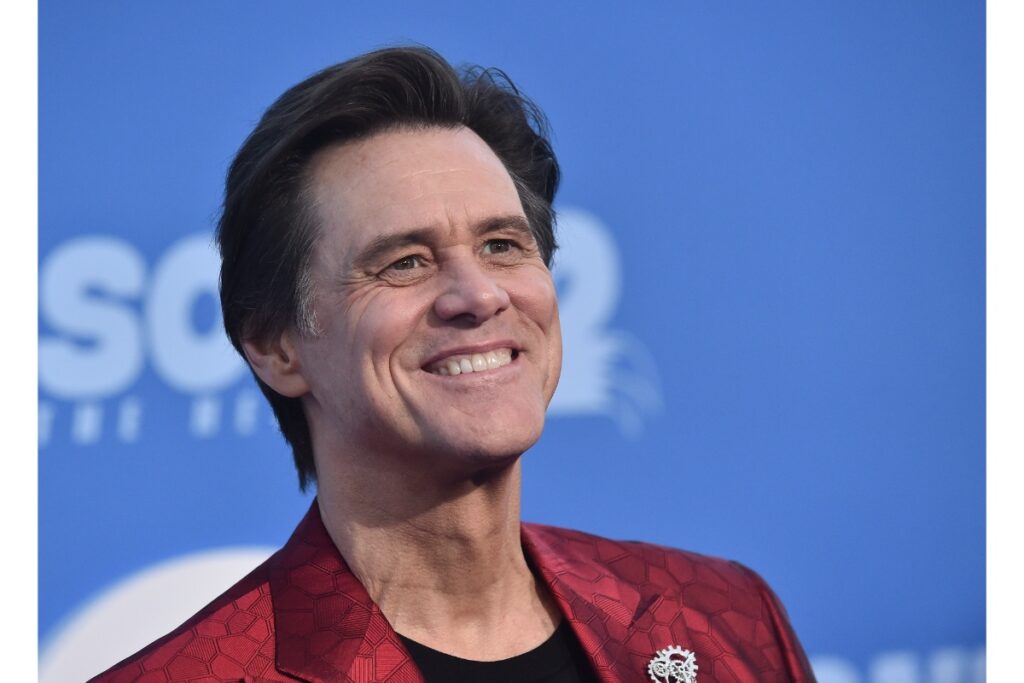
Did the César Awards applaud a legend, or a legend’s likeness? When a 62-year-old icon walks onstage and the internet swears it sees a mask, what exactly are we watching anymore?
Cameras flashed as a 62-year-old Jim Carrey accepted an honorary César in Paris, grinning through a French thank-you and the rubbery expressions fans know by heart. By the time Camille Cottin closed the tribute and Michel Gondry applauded, a different show was underway online: had the man on stage been Jim at all? Soon, British illusionist Alexis Stone fanned the flames, claiming the face was his. Between whispers of Botox, prosthetics, and AI-forged images, a lifetime award became a Rorschach test for what counts as real.
A mysterious appearance at the César Awards
On February 26, 2026, Paris watched Jim Carrey receive an honorary lifetime award at the Cesar Awards. The 62-year-old spoke clear French, slipped into elastic expressions, and bowed to long applause. Then the mood shifted, quietly. A ripple of online skepticism formed in minutes, asking if the figure onstage was exactly who he seemed.
The rise of rumors and public debate
The debate ignited after the televised speech, replayed in short clips across platforms. Viewers noticed a sharper hairline, smoother skin, and a slightly altered jawline, prompting theories about Botox, recent cosmetic work, or a stage double. This is the case where detail becomes storyline, with Alexis Stone, the British transformist, cited as the possible stand-in.
Alexis Stone’s bold claim
Alexis Stone, known for prosthetic-heavy celebrity transformations, stoked the frenzy by hinting they were the person onstage. Their portfolio includes convincing incarnations of fashion and film icons, sustained by high-grade silicone, dental pieces, and nimble misdirection. Were viewers cheering an icon, or a performance within a performance? The tease echoed a previous months-long metamorphosis stunt (2019) that blurred art and hoax.
Mixed reactions and deeper reflections
Reactions split. Some highlighted Stone’s expertise and alleged mask photos, while others pointed to live witnesses, backstage interactions, and Carrey’s fluent French as counterweight. In addition to technical doubts about matching his facial elasticity, a few flagged the telltale seams of AI-era bait, where a provocative post can steer attention at low cost.
The evidence scoreboard, if we must keep one, remains unsettled:
For impersonation: Stone’s track record, cryptic posts, and surface-level likeness.
Against: onstage micro-expressions, real-time banter, and testimonies from attendees.
Unclear: disputed mask imagery and edits circulating without provenance.
Beyond the whodunit, the moment highlights our fixation on authenticity. Image is pliable, tools are powerful, and certainty now travels slowly. According to studies on online rumor cascades, speed amplifies doubt faster than facts can catch up (a dynamic turbocharged by deepfakes-adjacent aesthetics). The Carrey episode doubles as a mirror, reflecting what we hope to see, and what we fear.