
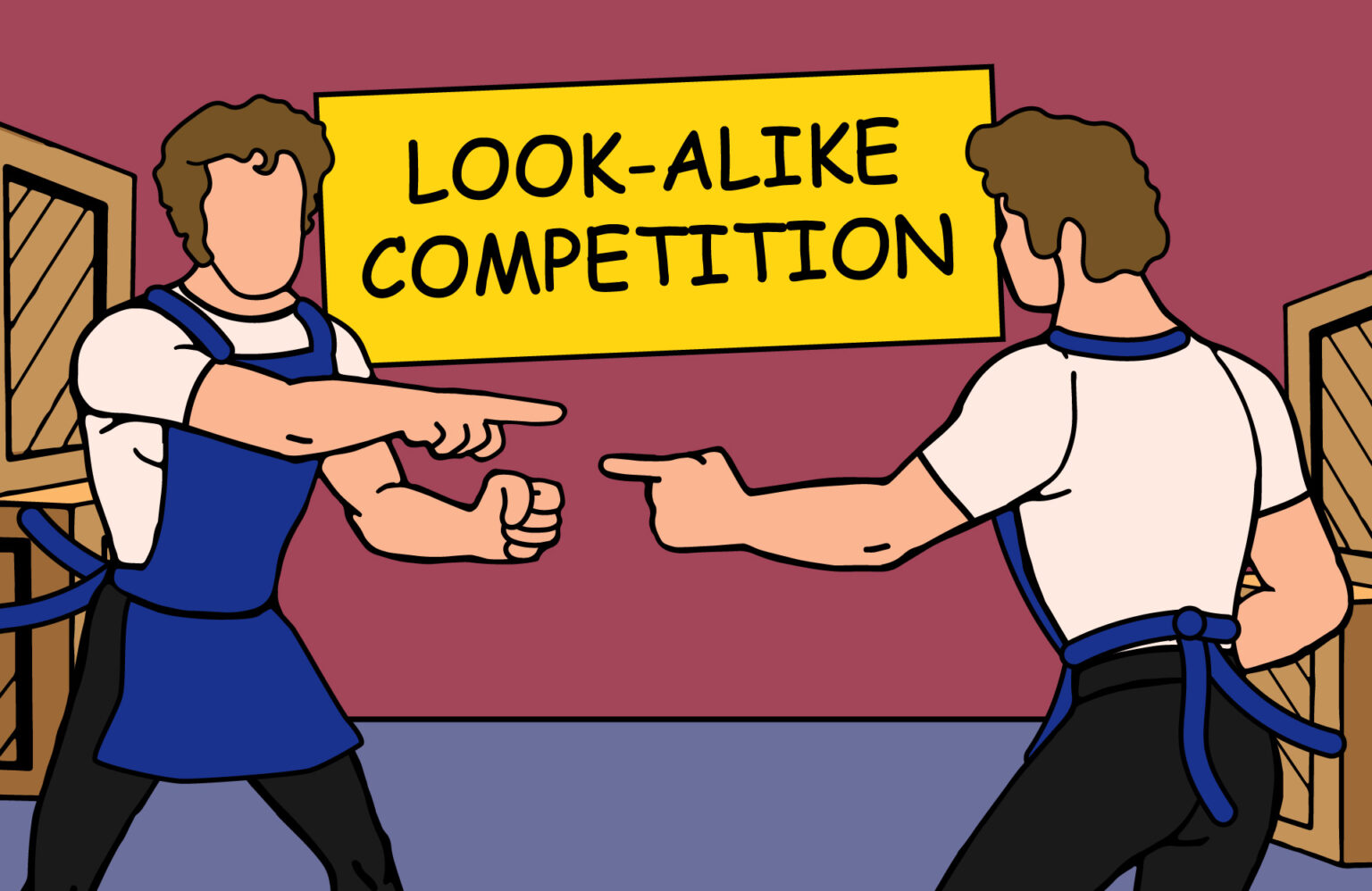
Thousands of people gathered last fall at Washington Square Park in New York for a Timothée Chalamet look-alike contest that quickly went viral online. These events have since become a widespread phenomenon. People have competed for the title of many popular celebrities, from actor Jeremy Allen White in 2024 to the characters of “Heated Rivalry” earlier this month.
These competitions use lighthearted and often satirical imitation to bridge the gap between reality and fame. Regardless of the winners’ actual resemblance to the celebrity — or the attendees’ interest in them outside of a quick scroll on Instagram — their online relevance makes these events worthwhile for many. Some think these contests even reflect the importance of real interaction in the age of digital obsession.
“Over the past few years, there’s been so much discussion over how social media leaves us feeling more alone,” said Ella Torode, a DePaul sophomore who attended the Jeremy Allen White look-alike contest. “Look-alike contests feel like a kind of protest to that idea, proving that maybe the internet can actually bring us together.”
While some applaud these competitions for their ability to create fun and interactive experiences, others critique them for perpetuating the need to copy what is socially admired. Torode believes these events are enjoyable, but is critical of how new competitions judge contenders based on their resemblance to online tropes.
At a “performative male” contest last August in San Francisco, contenders dressed as the meme of men who attempt to act feminine to attract women. Hundreds of people came, with participants carrying feminist literature and matcha drinks to depict the trope. Events with similar targets have evolved, including a “looksmaxxing” competition earlier this month in Chicago.
This shift has left some wondering whether these competitions satirize online culture and create community or separate and minimize people through categorization.
“The original look-alike contests were based on just emulating a character or person through costume, while ‘performative male’ and ‘looksmaxxing’ blur the line between a character and someone’s real life expression and body,” Torode said.
In her view, there is more objectivity when judging who looks the most like a celebrity than in titles that determine who is the most performative, masculine or attractive.
Microtrends on social media can connect users, but also isolate them from larger communities. This is especially relevant as many are still recovering from the 2020 quarantine.
Reliance on the internet drastically increased during the Covid-19 pandemic and continues to affect people’s socialization today. As communities still feel the impacts of isolation, DePaul sophomore Annika Klockowski believes look-alike contests are part of a post-pandemic reality. These contests make the internet’s convenience for communication real, as people begin to bond in person over what is inescapable online.
“Even now that we’re a few years past that, I feel like maybe it did have an effect on the way we build community,” said Klockowski, a communications major.
Nico Allen, a DePaul freshman and recent contender in a Hugh Jackman look-alike contest, shares similar feelings. They relate the desire for in-person connection to people’s difficulty socializing in a digital world.
“Everything needs to be compared to something else,” Allen said. “That’s kind of a phenomenon that’s been a big thing for a long time. But especially since Covid, people are categorizing themselves in terms of celebrities and personas instead of just allowing themselves to be who they are.”
As look-alike competitions continue to prevail, many stress the importance of bonding with others outside of trends on social media, while still enjoying and even being a part of pop culture.
“Celebrity look-alike contests are an indication of the internet and actual celebrities fusing, and everyone wants to take part in that,” Allen said. “That’s just human nature.”
Related Stories:
Support Student Journalism!
The DePaulia is DePaul University’s award-winning, editorially independent student newspaper. Since 1923, student journalists have produced high-quality, on-the-ground reporting that informs our campus and city.
We rely on reader support to keep doing what we do. Donations are tax deductible through DePaul’s giving page.