
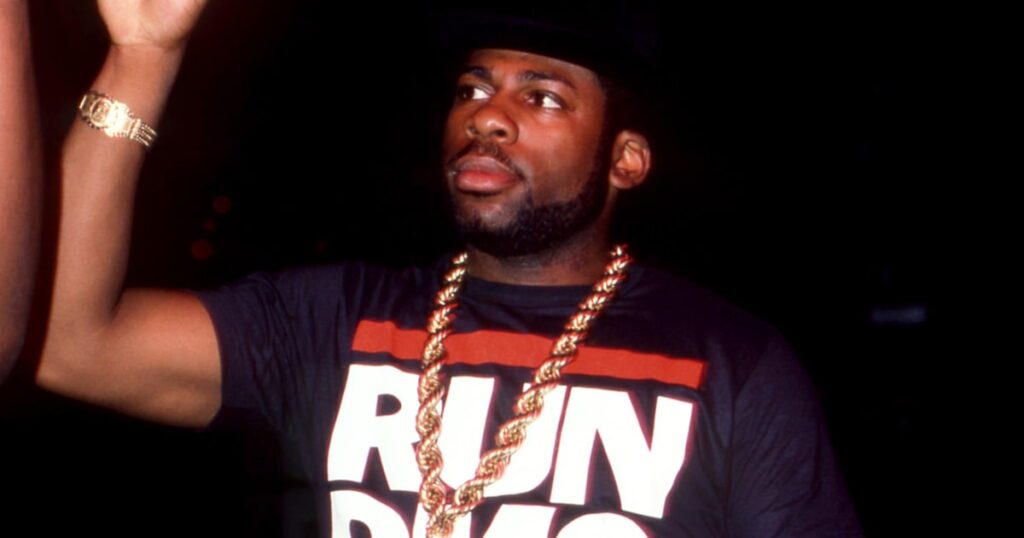
The third man accused in the murder of DJ Jam Master Jay pleaded guilty in federal court Monday for his involvement in the 2002 death of the former member of Run-DMC.

Subscribe to read this story ad-free
Get unlimited access to ad-free articles and exclusive content.

Jay Bryant, 52, was charged nearly three years ago in the death of the musician, whose real name was Jason Mizell. Federal officials initially charged Bryant with Mizell’s murder, to which he pleaded not guilty at the time.
On Monday, Bryant agreed to plead guilty to a murder charge in the Eastern District of New York.
He admitted in the Brooklyn courthouse that he helped let in the men who would kill Mizell at his New York studio in October 2002 in a planned ambush.
“I knew a gun was going to be used to shoot Jason Mizell,” Bryant told the judge. “I knew that what I was doing was wrong and a crime.”
Bryant did not name the men he assisted in the crime, but his plea comes after Mizell’s godson and friend were convicted of his murder. One of the men won an appeal last year to overturn his conviction while the other is still challenging his own case.
Mizell joined forces with Joseph “Run” Simmons and Darryl “DMC” McDaniels in the 1980s, working with them on some of Run-DMC’s biggest hits, such as “It’s Tricky.” Mizell went on to produce music and mentor up-and-coming artists, including rapper 50 Cent.
Prosecutors contend that Mizell’s godson, Karl Jordan Jr., shot the Run-DMC member while Ronald Washington, a friend of Mizell’s, blocked the door. Bryant allegedly slipped into the building and assisted the two men by opening a back door for them. Bryant was seen entering Mizell’s recording studio immediately before the shooting and his DNA was found on a hat at the scene, according to prosecutors.
Jordan and Washington were convicted by a jury in 2024 after federal prosecutors made their case that they killed Mizell in anger over a drug deal. Mizell had allegedly obtained 22 pounds of cocaine with the intention that the two men, along with others, would distribute.
But when Mizell told Washington he was no longer part of the deal, Washington hatched a murder conspiracy.
Washington and Jordan entered Mizell’s studio in the Queens borough Oct. 30, 2002, and ordered Mizell to lie on the floor. Jordan was the one to fire the gun, prosecutors said at trial, shooting two bullets at close range.
Jordan’s attorneys defended his innocence at trial, saying that he was at his girlfriend’s home at the time of the murder. He was convicted at trial of murder while engaged in narcotics trafficking, but the charge was overturned on appeal. His defense argued that prosecutors failed to provide enough evidence to prove that drug trafficking was at the root of Jordan’s involvement.
U.S. District Judge LaShann DeArcy Hall agreed. She wrote in her opinion that while it was clear in Washington’s case that he was bitter over the drug deal, prosecutors had failed to show Jordan had the same animus in the case.