
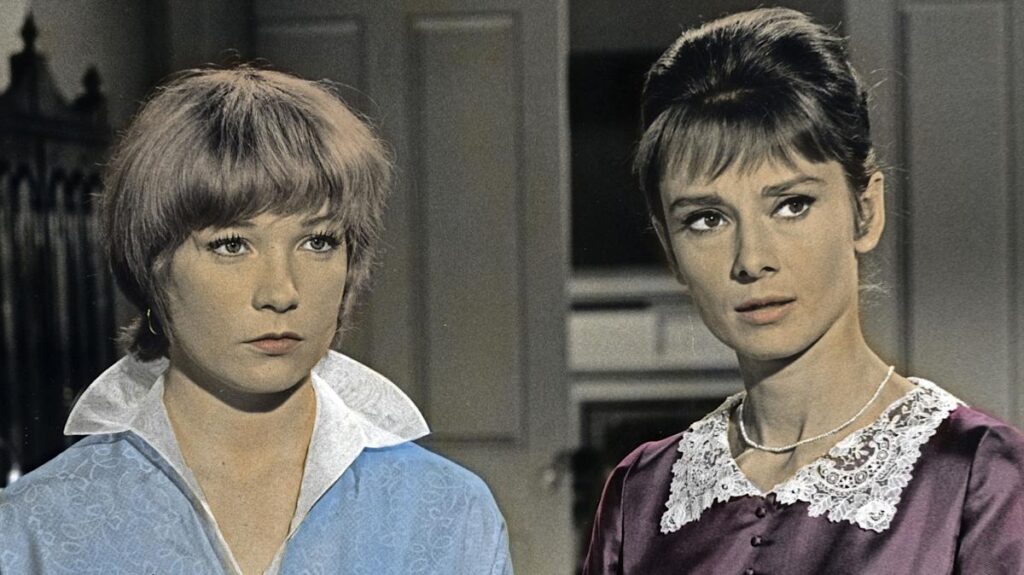
Karen Wright standing next to Martha Dobie in The Children’s Hour (1961) – United Archives/Getty Images
A movie’s financial performance doesn’t always correlate with its artistic quality — in fact, some of the most notorious box office bombs ever are actually worth watching. Something that succeeds at the box office may be utter trash, while something great may crash and burn when it plays in theaters. This was especially true in the 1960s, an era when domestic motion pictures began shifting their creative and tonal priorities around. In this age of momentous change, some movies inevitably flopped despite being brilliant.
There are five box office bombs in particular from this decade that need to be seen. In some cases, the very qualities that inform the artistic worthiness of these five movies ended up ensuring their financial doom, but these elements that couldn’t guarantee 1960s box office success have ensured the timelessness of these respective projects. Don’t be put off by their dire box office numbers, because these five ’60s movies should be seen by every film fan at least once in their lives.
Read more: We Didn’t Learn These Tragic Secrets About Actors Until After They Died
Fail Safe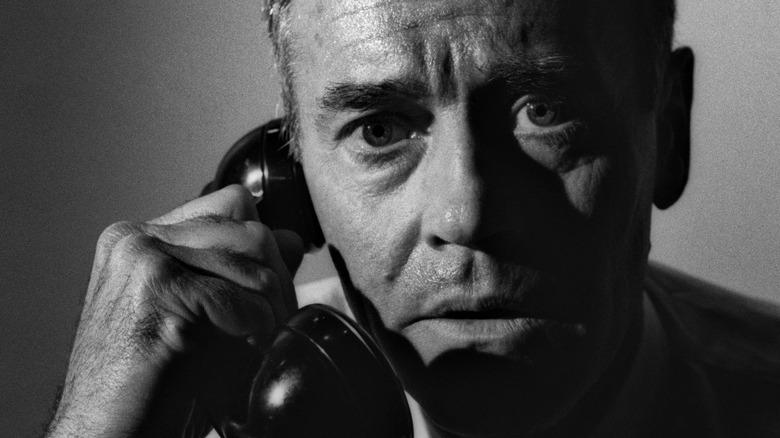
A distraught President of the United States on the phone in Fail Safe (1964) – Columbia Pictures
Many movies face some sort of marketing challenge in the lead up to their release. Sidney Lumet’s 1964 film “Fail Safe” had the monumental task of making a drama about the U.S. accidentally ordering the bombing of Moscow palatable during the Cold War era. It’s a grim story all about the worst possible nightmare scenario involving nuclear weapons. That’s not exactly a concept that suggests a breezy night out at the movies, especially given the nuclear paranoia of the time.
“Fail Safe” had a sprawling ensemble cast to its name, which included Henry Fonda, Walter Matthau, Larry Hagman, Frank Overton, and many others. That wasn’t enough to overcome the subject matter, which had played very differently in another film not long before “Fail Safe” came out. “‘Fail Safe’ did not do well at the box office, primarily because the earlier release of ‘Dr. Strangelove or: How I Learned to Stop Worrying and Love the Bomb’ blunted its impact, making nuclear warfare seem more a subject for dark humor than serious drama,” TCM’s Frank Miller writes.
That’s a shame, because “Fail Safe” is a top-shelf suspense thriller. Lumet and editor Ralph Rosenblum masterfully cut between various locales (from a war room to a bunker with the President to pilots up in the sky) without ever diluting the tension. The expansive scope just makes the central plot even more of a nail-biter rather than making the film feel bloated. Lumet’s commitment to an increasingly scary story jeopardized its financial chances but ensured “Fail Safe” emerged as a masterpiece in the long run.
The Trial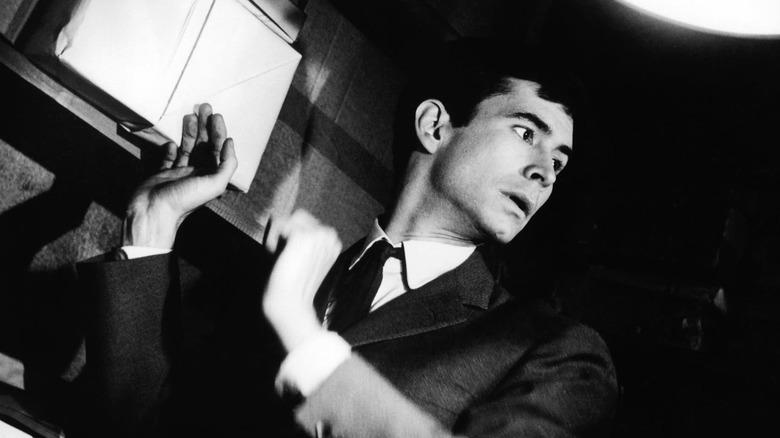
Josef K. looking over his shoulder in The Trial (1962) – Astor Pictures Corporation
He’s known as one of the greatest filmmakers who ever lived nowadays, but Orson Welles regularly struggled to get either financing or attention for his various audacious projects. This is despite his many accomplishments, like launching his career with “Citizen Kane,” one of the best directorial debuts of all time, and delivering “Touch of Evil,” one of the 20 best noir movies ever. His arduous obstacles extended to his 1962 film “The Trial,” an adaptation of Franz Kafka’s 1925 novel of the same name. This trippy tale follows ordinary bureaucrat Josef K. (Anthony Perkins), who is inexplicably arrested and sentenced to death despite not knowing what crime he’s committed.
Despite the intriguing premise, “The Trial” bombed at the box office, making less than $10,000 during its domestic opening and ultimately pulling in less than $100,000 worldwide in total. The fact that the project ran over schedule and over budget certainly didn’t help matters, but it was ultimately Welles’ reputation that doomed the “The Trial” to failure. Welles was “at the time a pariah in Hollywood subsisting as a peripatetic filmmaker and jobbing actor in Europe,” James Chapman wrote in a piece about “The Trial” in the Historical Journal of Film, Radio and Television.
“The Trial” was never likely to be a box office smash, but it has stood the test of time. It’s an incredibly unnerving watch that unflinchingly commits to depicting a world of inexplicable, straight-faced madness. The film never pumps the brakes on the impenetrableness of Josef K’s world, which makes for an engrossing atmosphere. Anthony Perkins is captivating in his haunting lead turn, while (per usual for a Welles movie) the filmmaking is incredibly evocative. Welles and his artistic gifts were perfectly suited for making this unforgettable “The Trial” adaptation.
Seconds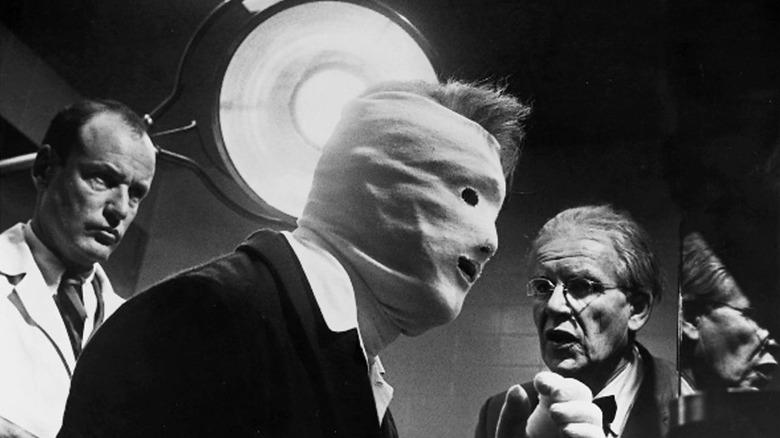
Tony Wilson waking up with bandages on his head in Seconds (1966) – Paramount Pictures
One of the stars of Hollywood’s Golden Age, Rock Hudson is to this day remembered for the persistent rumors around Tinseltown that he was gay, a rumor that turned out to be true. However, he’s also remembered for his considerable skills as an actor, which were on full display in hit films such as “Magnificent Obsession,” “All That Heaven Allows” and “Giant.” Unfortunately, Hudson hit choppier box office waters when he tried anchoring more unorthodox fare in 1966 with “Seconds,” the story of an ordinary banker who undergoes a procedure to get a brand new physical appearance and identity.
The man’s new form (Hudson) initially promises exciting new possibilities only to unleash a new kind of overwhelming nightmare. This is a trippy, disorientating film that sees director John Frankenheimer and cinematographer James Wong Howe not holding back on unusual shots and camera angles, though the out-there nature of the film is not why it bombed at the box office with a reported return of $1.75 million from a $2.5 million budget.
According to Frankenheimer, the reason “Seconds” failed is that people who liked typical Rock Hudson movies weren’t interested in it and those who would ordinarily show interest in a neo-noir sci-fi psychological horror film refused to see it because it starred Rock Hudson. He once jokingly said that only “five or six people” called their local cineplexes to ask what time “Seconds” was playing, to which the staff responded: “What time can you come down?” Those who did make the trip no doubt enjoyed it, because “Seconds” is now considered to be one of the most memorable films of the 1960s.
Nothing But a Man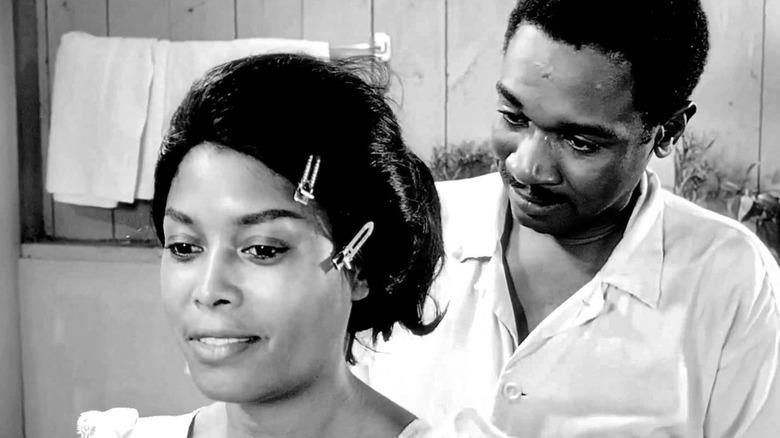
Duff looking at Josie in Nothing But a Man (1964) – Cinema V
Roger Ebert’s litany of film reviews fascinate on so many levels, including the five unexpected sci-fi movies he gave perfect scores to. One of his greatest qualities was his championing of underseen small movies that slipped through the cultural cracks. Case in point: the 1964 grounded drama “Nothing But a Man.” This feature chronicles the romance between Duff Anderson (Ivan Dixon) and his new lover Josie Dawson (Abbey Lincoln), as well as their endless problems navigating American racism. Ebert’s review not only highlighted the film’s artistry, but also provided helpful context for why it never broke out.
Per Ebert, the film (which cost $300,000 to make) never got a proper theatrical run. “At the time its release was spotty, and today there are few people who have seen it,” he said upon revisiting the film in 1993. Because of this, “Nothing But a Man” made pennies at the box office. That’s a tragic outcome since this movie is outstanding on so many levels. There’s an unhurried, observational quality to this feature missing from default 50s/early 60s Hollywood dramas, which tended to lean towards maximalism and grandeur.
This film’s unflinching portrayal of morally complex Black characters and systemic racism allow the assembled actors to sink their teeth into riveting, nuanced roles. Abbey Lincoln, in particular, delivers unforgettable work all throughout “Nothing But a Man.” This starkly drawn production deserved a greater theatrical presence when it first opened. Thankfully, writers like Ebert kept “Nothing But a Man” and its accomplishments on people’s radars in the decades that followed.
The Children’s Hour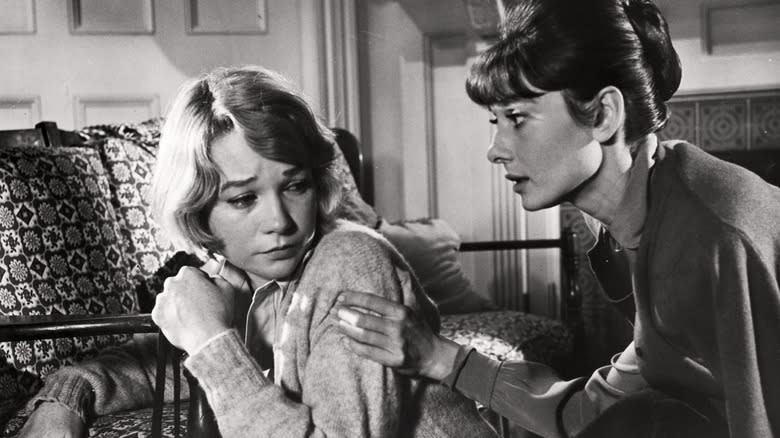
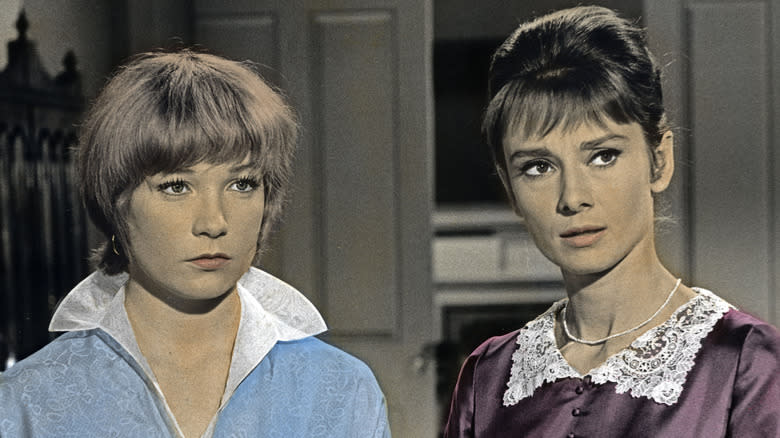
Martha Dobie being comforted by Karen Wright in The Children’s Hour (1961) – United Artists
With LGBTQIA+ representation in modern movies alarmingly low, the constant struggle to get queer stories into American cinema rages on. In some ways, 2020s motion pictures mirror the 1960s, when queer material existed only in subtext and hints. Into this domain walked director William Wyler’s “The Children’s Hour,” an adaptation of Lillian Hellman’s 1934 play of the same name. It follows boarding school teachers Martha Dobie (Shirley MacLaine) and Karen Wright (Audrey Hepburn), who get on the wrong side of adolescent bully Mary Tilford (Karen Balkin). The malicious child spreads a rumor that Wright and Dobie are gay lovers, an accusation that immediately makes the two women social pariahs and dooms their business. Given the modern world’s targeting of queer and trans educators, the story of “The Children’s Hour” remains chillingly relevant.
The film commits to a bleak atmosphere emphasizing the quietly brutal ramifications of prejudice. This is an aching, often haunting movie that’s hard to shake off. Hepburn and MacLaine are magnificent portraying their respective characters responding to their turmoil. They’re both so richly human and compelling. Unfortunately, those qualities weren’t enough to make “The Children’s Hour” a financial success. According to Tino Balio’s book “United Artists: The Company That Changed the Film Industry,” the film cost $3.6 million to make and ended up losing $2.8 million. At the time, Variety said that the movie likely failed because “the sophistication of modern society makes the events slightly less plausible” compared to the era of the play. Little did the writer know that society would still be struggling to accept such stories in the 2020s.
If you enjoyed this article, sign up to our free newsletter for the biggest movie and TV news delivered straight to your inbox. You can also add us as a preferred search source on Google.
Read the original article on Looper.