
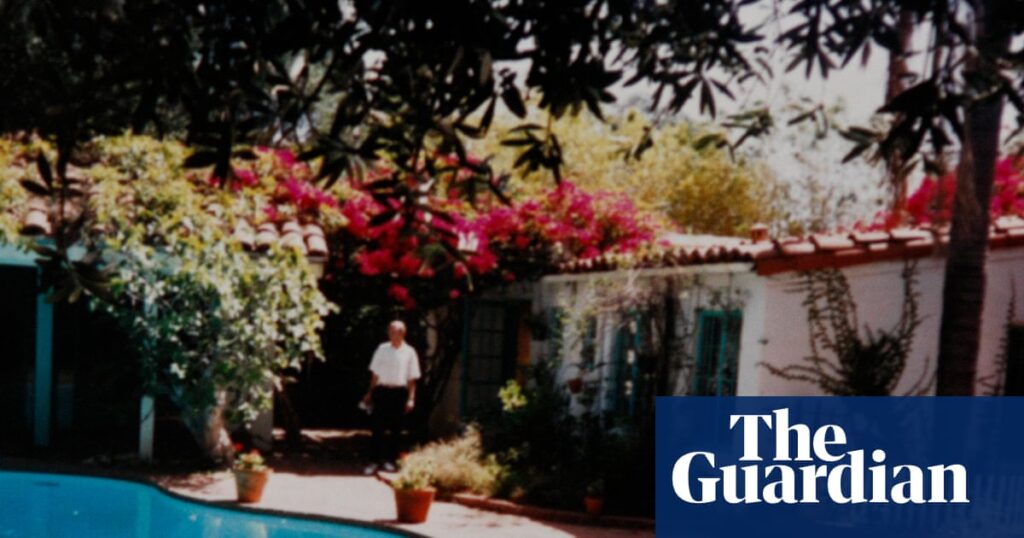
Marilyn Monroe is said to have had more than 50 addresses in her lifetime, but only once, in the final months before she died from a drug overdose at the age of 36, did she have a house she could call fully her own.
The Hollywood star, burned out by the failure of her marriage to the playwright Arthur Miller and by health problems that prompted a year-long hiatus from acting, bought herself a quintessential hacienda-style Spanish bungalow with a pool at the foot of the Santa Monica mountains in February 1962.
At the time, it was almost unheard of for a single woman to own property. For that reason, cultural historians and preservationists associate the house with the same trail-blazing spirit that spurred Monroe to help break the studio system and establish her independence – from the movie industry and from the men who used and abused her on her way up.
She did not spend long at the house, in the affluent Brentwood neighborhood in west Los Angeles. And she barely had time to decorate it with much more than a few tiles and textiles she bought on trips to Mexico.
But, the preservationists say, that does not diminish its symbolic importance – or its central place in the many conspiracy theories about her death there in August 1962. “She talked about this house and was photographed in this house. It was where she was embarking on a new chapter of her independence, and it tells an important, poignant story about her,” says Adrian Scott Fine, the president and chief executive of the nonprofit LA Conservancy.
View of Marilyn Monroe’s Spanish Colonial-style former house in Los Angeles, California on 11 September 2023. Photograph: Mike Blake/Reuters
The current owners of the property beg to differ, however. Brinah Milstein, a real estate heiress, and Roy Bank, her reality TV producer husband, paid $8.35m for it in 2023 with the intent of demolishing the original house and incorporating the land into the adjoining half-acre estate where they’ve lived for a decade.
To them, the house was an unoccupied wreck. As they later explained in court filings, they saw no reason to tread carefully because there had been no official objections to more than two dozen previous requests to modify the property. They applied for – and initially received – a demolition permit.
Word of the permit quickly spread, however, and led to a public campaign to designate the house a “cultural-historical monument”, a protection finalized in 2024. Demolition came off the table, and Milstein and Bank are now suing the city to demand compensation for what they say is an infringement of their constitutional property rights and a multimillion-dollar investment that has become essentially worthless.
The designation grants city officials the authority to ensure that a building of historic interest is not destroyed or modified beyond recognition, while putting homeowners under no obligation to open their doors to the public. However the homeowners’ lead lawyer, speaking on behalf of the couple, argued that Milstein and Bank have in effect been forced “to preserve and maintain a monument on their own dime for the public’s enjoyment”.
It’s not an argument that has carried much legal weight so far. A federal judge this week dismissed the allegation that the city had improperly taken control of private property, although he left room for Milstein and Bank to file an amended complaint with stronger arguments. An attempt to overturn the historical preservation order, meanwhile, has yet to gain any traction in state court.
Still, all sides agree that the circumstances are unusual. Buyers generally know about a house’s historic preservation status in advance, and existing homeowners generally have a functioning house they can sell if they do not want to work with the city to preserve its historic features.
A police officer in front of Marilyn Monroe’s house, where she was discovered dead, on 5 June 1962, in Brentwood. Photograph: AFP/Getty Images
“The intent of the statutes is that all parties are willing participants,” said Pete Brown, a spokesperson for the city council office in the forefront of the campaign to save Monroe’s house. “But that’s not what we have in this case.”
Regardless of how the legal battles play out, the city still faces a fundamental dilemma because the house has not been maintained since it was last occupied in 2019 and it is far from clear how the owners can be induced to fix a structure they never wanted in the first place.
Some preservationists worry the house is undergoing “demolition through neglect” – a slow erasure of the history connecting the house to Monroe that a city designation, on its own, can do nothing to halt or reverse. The house has been renovated multiple times since 1962, and the current owners claim that Monroe’s Mexican tile and other personal touches are all long gone.
Staff from the city’s office of historic resources and cultural heritage commission have not visited since 2023, but according to photographs and court filings a large section of the roof is untiled and exposed to the elements, the heating and plumbing systems do not work properly, and there are leaks and possible mould infestations.
Three years ago, the city found that “significant character-defining features” were still intact, but the planning office says it cannot be sure whether that remains true. The homeowners, for their part, allege in their lawsuit that “many elements of the house [are] in disrepair and non-functional”.
There are questions, too, about how meaningfully the designation serves the public interest since the house cannot be seen from the street and there is no right of access. Nearby residents have complained about celebrity tour buses and other visitors clogging the neighborhood, when there is little for them to see beyond a narrow cul-de-sac with a whitewashed wall and hedges. Some of those visitors have been caught on security cameras attempting to hop over the property wall and explore beyond, prompting public safety concerns.
The Los Angeles city planning office says it has powers it can invoke if it determines that a historical property has become substandard, hazardous or a “nuisance”. The building and safety department can have the house “immediately barricaded and protected” and carry out any necessary repairs, with the homeowners footing a large portion of the bill.
View of the front entrance of Marilyn Monroe’s house in Los Angeles, California on 11 September 2023. Photograph: Mike Blake/Reuters
David Breemer, the lead attorney representing the homeowners, said he was not afraid of such enforcement and expected any demands from the city to be folded into an overall settlement. He declined to outline what such a settlement might look like, saying only that his clients were looking for “just compensation for the lost value of their property”.
“Selling is not really an option … And they don’t want to be landlords,” he said. “What renter would want to rent a house with trespassers crawling over the wall?”
Any individual or foundation willing to take on the property would probably be looking at millions of dollars to buy the property and renovate it – and no such entity has come forward. The city, for its part, has not entertained the possibility that it could buy the house, or any other historic home in trouble.
“The city does not have a dedicated funding source to purchase more than 1,300 historic-cultural monument properties,” the planning office spokesperson said.
Traci Park, the councilwoman who represents the district where the house is located and championed the preservation of the house in 2023, has said there was “no other person or place in the city of Los Angeles as iconic as Marilyn Monroe and her Brentwood home”. But Brown, her spokesman, said there were limits on what the city could do and the councilwoman had no game plan to offer while legal proceedings were pending.
“It’s a quandary,” Brown said.