
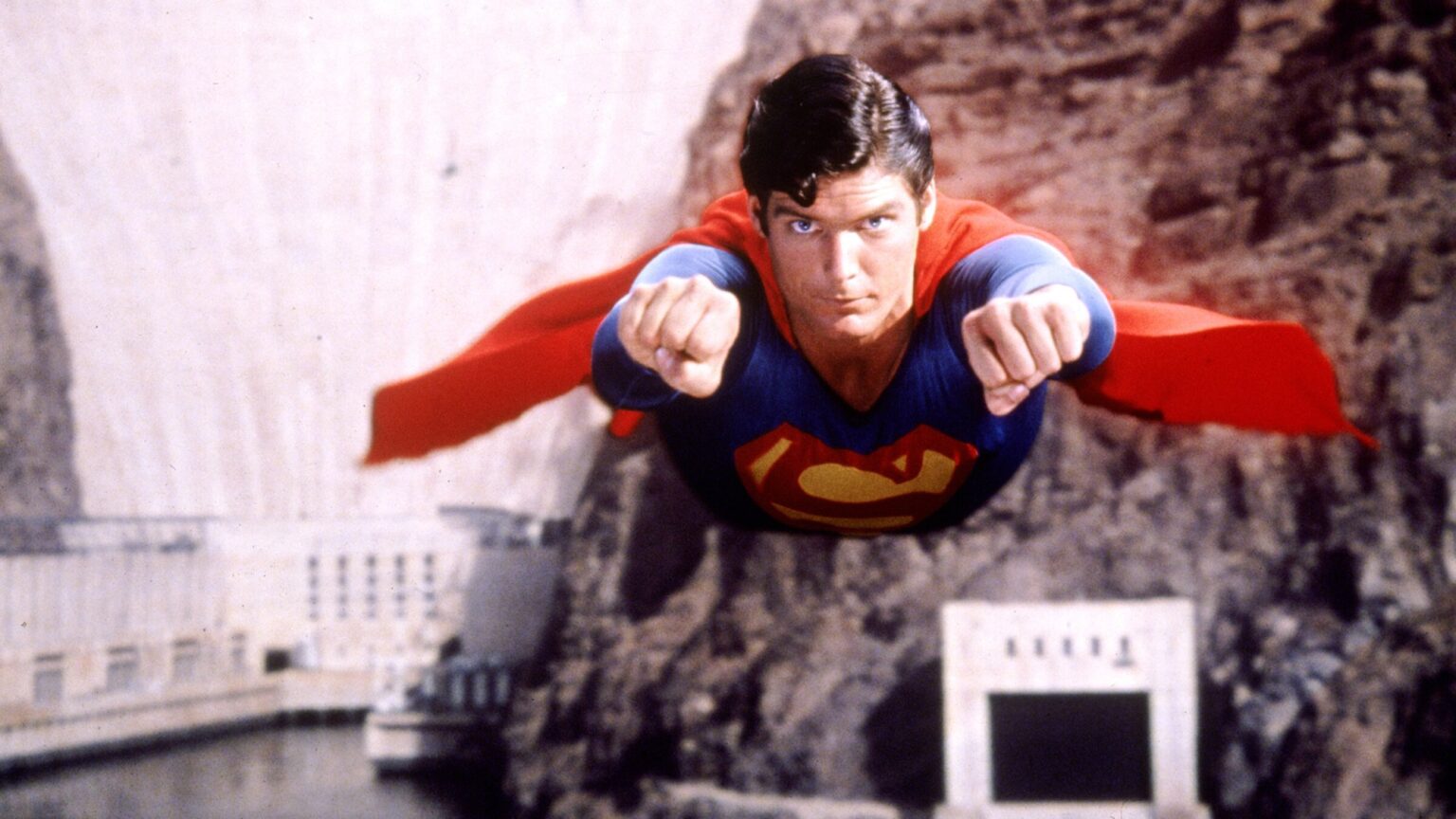
No character in American comics has been as consequential to the medium as Superman. Jerry Siegel and Joe Shuster introduced Kal-El in Action Comics #1 in April 1938, and the character became the foundation upon which the entire superhero genre was constructed. Almost nine decades later, superheroes continue to dominate the Western comic industry, underlining the character’s importance. Of course, Superman’s success included a broad expansion beyond the page. In the decades that followed his comic debut, Superman was featured in radio serials, movies, TV shows, and Saturday morning animated programs that marked generations of children. Richard Donner’s 1978 feature film, with Christopher Reeve in the title role, also proved that superhero filmmaking could achieve the same prestige as any other dramatic genre.
The Man of Steel’s theatrical future is also assured after James Gunn’s successful reboot of the character with 2025’s Superman, which grossed $618.7 million worldwide and became the highest-grossing superhero film of the year. A sequel, Man of Tomorrow, already began filming, with David Corenswet and Nicholas Hoult returning as Superman and Lex Luthor, and Lars Eidinger cast as Brainiac. Across nearly 90 years of Superman adaptations, filmmakers condensed decades of comics mythology into manageable runtimes, but the theatrical history of Superman still features moments where specific panels and comic book sequences were reproduced on screen with precision.
5) The Action Comics #1 Car Lift (Superman Returns)
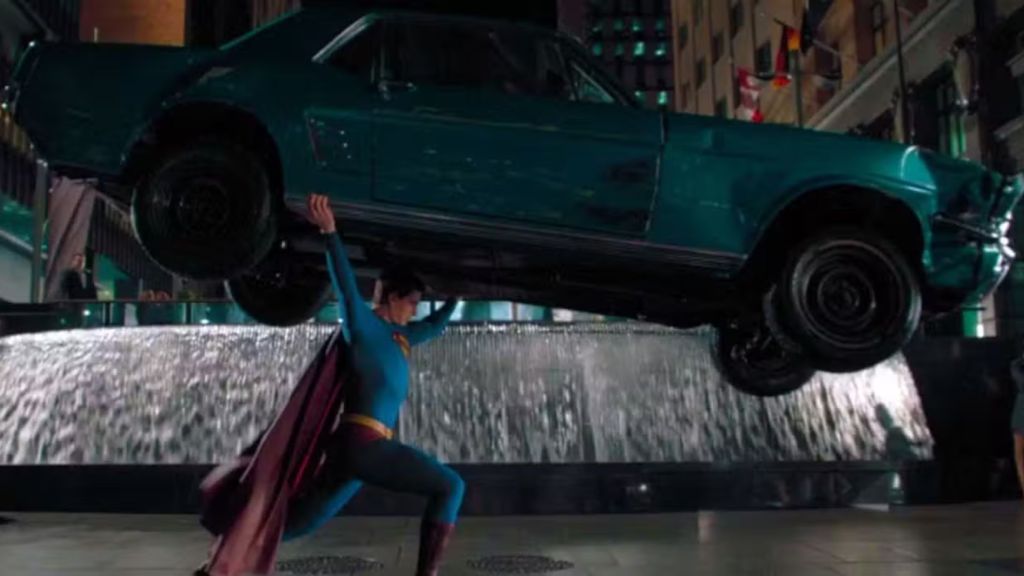 Image courtesy of Warner Bros. Pictures
Joe Shuster’s 1938 artwork of Superman hoisting an automobile above his head as terrified onlookers flee single-handedly heralded the dawn of the superhero genre in Action Comics #1. In 2006’s Superman Returns, director Bryan Singer paid direct visual tribute to this historic illustration. During a sequence where Superman (Brandon Routh) rescues Lex Luthor’s accomplice, Kitty Kowalski (Parker Posey), from a sabotaged runaway Mustang, he catches the speeding vehicle from below and holds it high above his head. The camera deliberately frames Routh in the same iconic posture as Shuster’s original drawing. However, rather than violently smashing the vehicle against a rock to intimidate criminals as he does in 1938, Routh’s Superman gently lowers the car front-first to the ground to ensure the driver’s safety. This subtle subversion faithfully preserves the historic 1938 tableau while updating its context to reflect the altruistic figure that Kal-El evolved into over the subsequent decades.
4) The Death of Superman (Batman v Superman: Dawn of Justice)
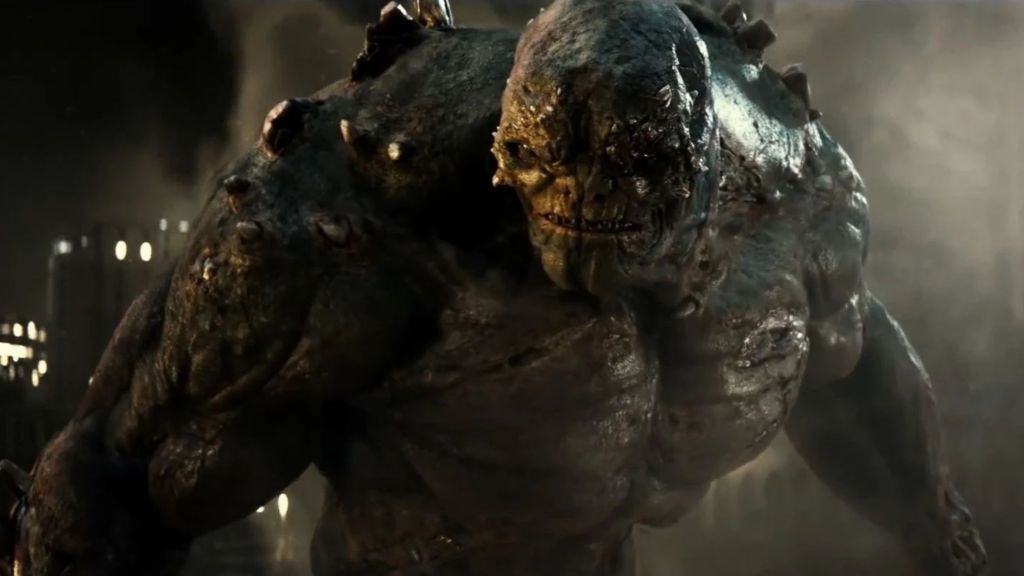 Image courtesy of Warner Bros. Pictures
Dan Jurgens’ Superman #75 shook the comic industry by featuring an unexpected finale for the battle between Superman and Doomsday. Instead of Kal-El coming out victorious of the duel, both combatants landed killing blows simultaneously before collapsing in the ruins of Metropolis. Just like that, Superman was dead, sacrificing his life to stop a threat so big no one else could. Zack Snyder adapted that moment in Batman v Superman: Dawn of Justice. Instead of trading punches, Superman (Henry Cavill) drives the Kryptonite spear through Doomsday while the creature simultaneously impales him with a bone protrusion, but the scene preserves the mutual destruction nature of the original comic books, highlighting Kal-El’s willingness to sacrifice himself for the sake of humanity. Snyder also adapted the most widely circulated image from Jurgens’ original story, staging Superman’s death in the arms of Lois Lane (Amy Adams) in a direct visual homage to the panels.
3) The Battle of Metropolis (Superman II)
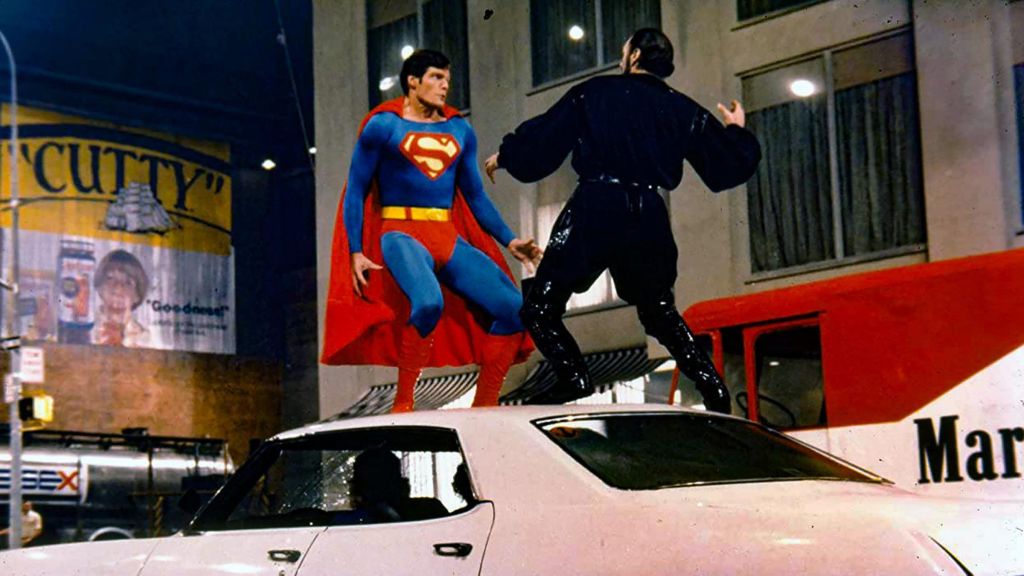 Image courtesy of Warner Bros. Pictures
Zack Snyder’s climactic showdown in Man of Steel wasn’t the first cinematic version of the devastating Kryptonian brawls from the comics. The iconic Metropolis fight in Superman II, where General Zod (Terence Stamp) and his cohorts engage Superman in a city-leveling battle, was directly influenced by the Phantom Zone arc from Action Comics #471-473. The comics storyline features Superman battling Zod, Faora, and other Phantom Zone inmates, with the conflict spilling into the streets and endangering civilians. The film captures this chaos, right down to the specific beat where a terrified crowd is forced to take shelter as the super-beings trade world-shattering blows. It’s a faithful cinematic adaptation that preserves the comics’ high-stakes threat, while still giving enough attention to civilians trapped in the middle of the brawl.
2) The First Flight (Man of Steel)
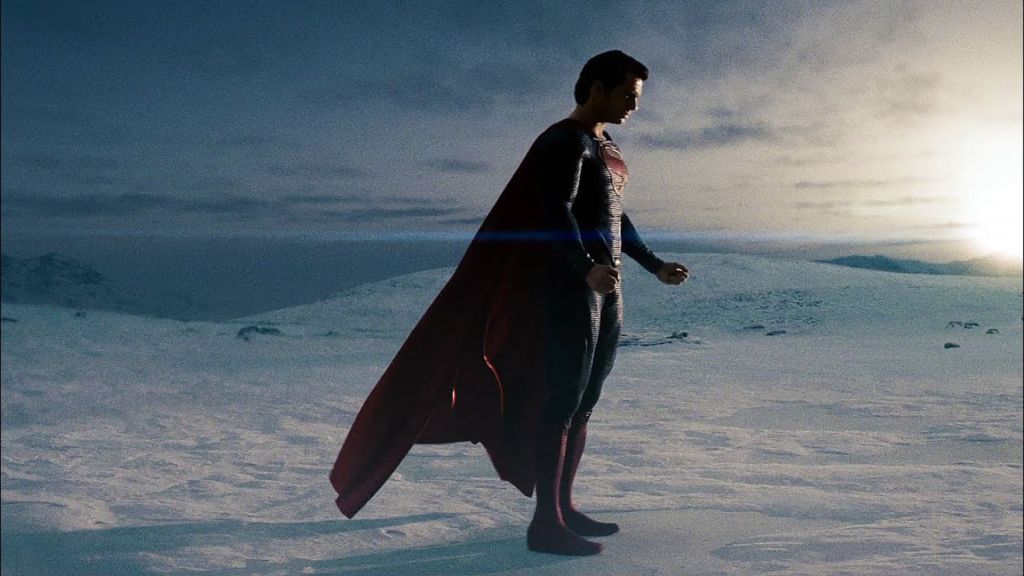 Image courtesy of Warner Bros. Pictures
While the concept of Superman’s inaugural flight has been depicted countless times, Man of Steel meticulously honors the definitive modern origin, John Byrne’s The Man of Steel #1. The post-Crisis on Infinite Earths relaunch famously showed a conflicted Clark Kent, having just learned of his alien heritage, leaping into the sky for the first time not with perfect grace, but raw force. Zack Snyder’s film directly translates this panel to the screen. As Jor-El (Russell Crowe) explains his true origins, Henry Cavill’s Clark Kent exits the Kryptonian scout ship in the Arctic and launches himself into the sky with an uncontrolled burst of speed and power. The sequence precisely recreates Byrne’s imagery of a man testing his own limits.
1) The Cat Rescue (Superman: The Movie)
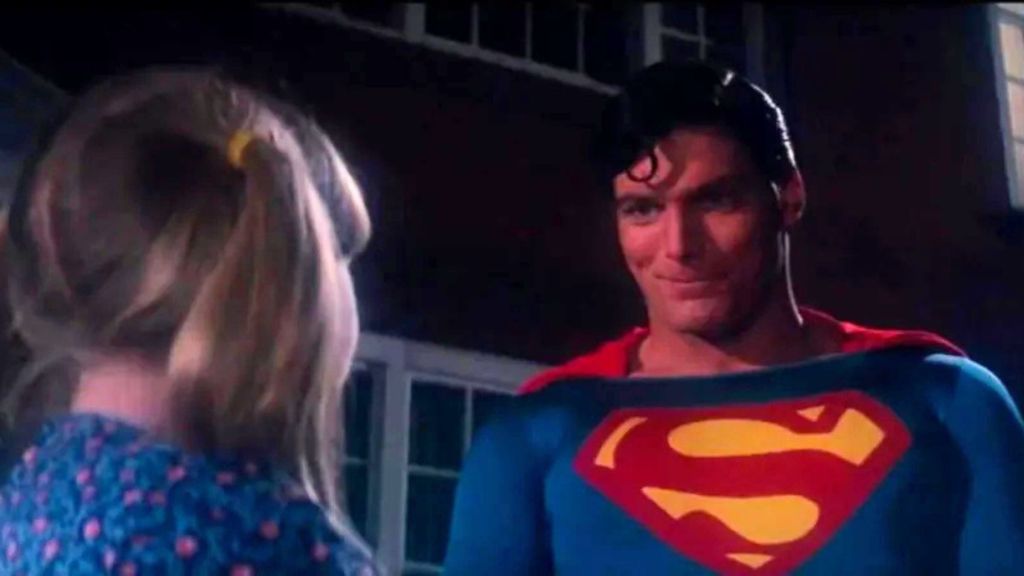 Image courtesy of Warner Bros. Pictures
The sight of Superman rescuing a stranded feline from a tree has been a recurring bit of comic whimsy for decades, summarizing the gentle, community-minded heroism that balances the character’s god-like powers. Richard Donner’s Superman: The Movie paid direct homage to this Silver Age staple during the hero’s introductory rescue montage. As Christopher Reeve’s Man of Steel zooms across Metropolis, he pauses to pluck a cat from a high limb and return her to her owner, recreating the small-scale, deeply human heroics that remind audiences Superman cares about every life, not just world-ending threats. Curiously, James Gunn’s Superman would also tap into the same tradition, with David Corenswet’s Kryptonian saving a dog and a squirrel during the kaiju attack.
Which Superman scene from the DC movies do you consider the most faithful to the comics? Leave a comment below and join the conversation now in the ComicBook Forum!