
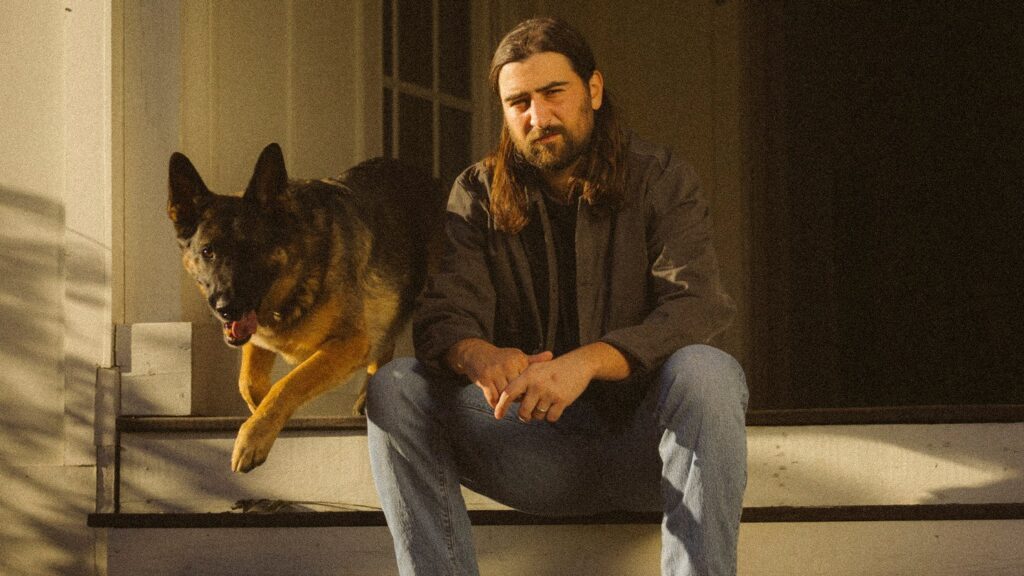
In the wake of his smash hit “Stick Season,” Grammy nominated singer-songwriter Noah Kahan found himself at a crossroads.
How does an artist follow up an album that categorically changed their life? A breakthrough hit is what most dream about, but what comes next is much less frequently talked about. Kahan outlined much of this struggle in his recently released Netflix documentary, Noah Kahan: Out of Body, but the real exploration comes on his newly released fourth studio album, The Great Divide. The 17-track album is expansive and features several songs that clock in at more than five minutes long.
The album digs into Kahan’s life now and how fame has changed his relationships with his loved ones and himself. Of course, the singer also digs into how fame has changed his relationship with his home of Vermont, frequently featured in his lyrics. He makes several references to 89, the highway running through the area of New Hampshire and Vermont he grew up in (I’m a Route 3 and 293 person myself) and there’s an assortment of Easter eggs for those familiar with the region.
Kahan’s next chapter is decidedly bright and long. Below, The Hollywood Reporter digs into The Great Divide track-by-track.
“End of August”


Image Credit: Mercury Records
Kahan drops listeners into the world of The Great Divide with opening track “End of August.” The track, produced by Kahan and Aaron Dessner, begins with the ambient sounds of bugs buzzing. If you close your eyes, it’s easy to imagine yourself sitting outside in the Vermont golden hour setting the song evokes.
The song seems to depict a drive into Kahan’s home state of Vermont. The singer-songwriter name drops his brothers, spotting license plates from the neighboring state of New York and the interstate highway 89 that intersects through the area of New Hampshire and Vermont, where he grew up. “End of August” is the perfect opener for Kahan’s next chapter. It sets the scene that, yes, this will be another album that seems to take inspiration from Kahan’s own life, but sonically speaking, it’s a clear indication that this album is not another Stick Season.
The idea that The Great Divide would be more of what he’d put out before with breakout album Stick Season was a fear Kahan expressed in his recently released Netflix documentary Noah Kahan: Out of Body.
Coming in at more than five minutes, “End of August” ignores the increasingly frustrating trend of short songs. It’s a proper warmup for the next 16 tracks. It starts mellow and builds up throughout the song, much like the anticipation for what’s to come.
“Doors”
If “End of August” was the warmup, “Doors” is the moment things start to pick up. Throughout Out of Body, Kahan expresses that he’d been struggling with finding the right inspiration and tone for the album that would become The Great Divide. The film’s endpoint finds the singer in the studio playing this song.
The nearly-four-minute track is all at once cinematic and subtle. Kahan’s explosive vocals come alive on the second verse. “Have you ever stared directly at the sun? / Have you ever shared some closeness, so exposed, to have it spit back by someone,” he croons. “So forgive me if I jump / At the rattle of your keys, oh are you leaving, no babe I’m just waking up.”
“American Cars”
Image Credit: Patrick McCormack
The album’s third track finds Kahan at peak folk-pop. One of The Great Divide’s catchiest tracks, “American Cars” feels right at home in Kahan’s discography, while simultaneously feeling like a bit of a sonic risk.
The song, anchored by groovy guitar beats, tells a clear story of calling someone back home — “Headlights, your plates / 4CB3A” and “You’ve been drivin’ all day / But you’re here and we’re so grateful you are” — to have them “fix” something, or more likely, someone.
“American Cars,” what should be a definitive contender for a down-the-line radio single, is a standout on the album.
“Downfall”
“Downfall” is one of the most lyrically dense tracks on the record. The melancholic anthem is romantic in its own way — sort of. The song, in a way, feels like a spiritual callback to Stick Season’s “All My Love” and seems to describe a past love that can’t seem to stay away. “You state a feeling like a fact / I’m glad you left, but you’ll be back,” he sings on the pre-chorus.
Kahan’s “rooting” on his former love’s downfall, but it’s all in the name of her coming back. The song’s a bit tongue in cheek, at times, but it’s also what an inner monologue of a revolving door relationship can look like: “I won’t rub your face in it / I swear I won’t tell anyone / I don’t mind being your dead end / I think it’s fine to never move on.”
“Lighthouse” (Extended Edition Track)
In this haunting track, Kahan seems to look back on someone who has left the town behind. It’s almost a tragedy. “Lighthouse” wasn’t included on the original album, as it provides some top-tier lyricism: “You were born with a face made for a missing sign / But you had something misplaced that you spent your life trying to find / Still hear your name from some of the local guys / Said they always placed you for the leavin’ type.”
“Paid Time Off”
By track five, Kahan takes a folk-filled moment to breathe with “Paid Time Off.” The nearly four-minute long song is yet another narrative-heavy track, which is what the singer-songwriter is perhaps best known for. Kahan produced and wrote the song alongside frequent collaborator Gabe Simon. “Paid Time Off” feels at home with some of other mellow tracks from previous releases.
“The Great Divide”
As the first track released from the album, “The Great Divide” set the tone for the album, and the rock-infused track remains a highlight. Kahan previously told THR there were many discussions about whether or not the title track should be the first single from The Great Divide.
“It’s the best entryway into the record from a storytelling and sonic perspective. I think it offers something a little bit different from a lot of the stuff on Stick Season,” Kahan said.
“There’s a little bit more going on musically, it’s a little bit more rocking, and I think that is really fun because that’s the direction I want to go in,” he added. “It also just tells a story that I think is emblematic of the entire album.”
“Staying Still” (Extended Edition Track)
A highlight of the extended version, “Staying Still” is another track examining a relationship that faces distance.
“All love, must leave, oh search for it I will / Honey, tell me, are you good at stayin’ still,” Kahan sings as he finds himself wishing he could make the distance go away.
“But the Charles meets the sun / And the Harvard track team runs, past my truck, stuck on Storrow / And I never ask for much / But I hope that Logan crumbles, and gets hit by a tornado,” he sings on the pre-chorus, referencing Boston’s Logan Airport.
“Haircut”
Image Credit: Patrick McCormack
This straightforward folk track digs into some intense feelings of resentment toward whoever is the subject of the song. “You grew your hair out long / Now you think you’re Jesus Christ / Ain’t nobody mistaking your guilt for some great sacrifice,” Kahan sings. As the song’s bridge ends, he sings, “Spare us all your pity love / Save it for the microphone.”
“Willing and Able”
Kahan is exploring what life looks like in a post-Stick Season world for him, but more importantly, what it looks like with the people in his life. It’s another topic that the singer dug into during his documentary, and all roads seem to lead back to the idea that Kahan is at a different stage emotionally and physically now — a big part of Out of Body shows Kahan’s conflicting feelings about leaving Vermont for Nashville, and what his relationship with Stafford looks like now.
But “Willing and Able” hits a bit harder than others on the album, lulling the listener into complacency with its dreamy acoustic melody. The song’s second verse cuts like a knife. “Look at you leaving again, it’s all you know how to do / Go ahead, take the last of the drinks; the world belongs to you,” he sings. “They say you’re a light; all I see is a shadow / And I’ll see you again in six months, when you need your next song.”
“Dashboard”
As the singer heads into the back half of The Great Divide, “Dashboard” provides another Kahan classic. It’s catchy, addictive and full of his signature lyrical one-liners. The chorus is a highlight of the song, and the album, and it’s sure to be stuck in listeners’ heads for days: “Look at you go, crossin’ state lines with your shadow / Trying to run away / Change your zipcode / Turns out you’re just an asshole.”
“23”
On “23,” Kahan digs into another throughline on the album: anger. The singer doesn’t need to sort out his less-than-stellar feelings on big, aggressively loud tracks; instead, he opts to include some of his most cutting lyrics and big feelings on The Great Divide‘s most mellow offerings. The song also features one of the most memorable moments on the album, lyrically speaking (“Tattooed your initials on my right arm / So I’d see your name when I lift up a drink”).
“Porch Light”
Kahan and Dessner teamed up for this track, which was released in March as the second single off the album. Kahan and his team have a lot to be proud of with The Great Divide, but perhaps their greatest achievement is how they selected the two songs to drop ahead of the album’s release. “The Great Divide” showcased the punchier side of this album, while “Porch Light” reminds listeners what Kahan does better than anyone else — subtle yet devastating tracks that manage to be so catchy they feel right at home on Top 40 radio.
“Deny Deny Deny”
Image Credit: Patrick McCormack
As The Great Divide nears its end, Kahan goes full folk rock with “Deny Deny Deny.” It’s undoubtedly the strongest track of the album and an addictive, windows-down summer anthem. As long as you look past the low-key devastating tale of an interpersonal dispute Kahan seems to be working through here.
“I’ll get your house paid off so the feds can’t touch it / Another thing we don’t talk about anymore,” he sings on the chorus. “Don’t worry, I won’t bring it up / You can scream at me when you come home drunk / And it’s fine, I know the company line / When I ask about the past you deny, ny, ny.”
“Headed North”
It’s back to the sound of bugs in the New England summer for this folksy track, which features two separate guitar solos. The song a bit of a townie anthem, meant with the most love, of the singer seemingly reporting back to someone who’s left the tarea behind. And it’s a bit of an “if you know you know” for those of us who grew up or spent time in these rural New Hampshire and Vermont towns full of contradictory ideas. That’s best exemplified through some of the lyrics on the first verse — “I always wish you well when I pass the old gas station / With the banner on the front that shows how tolerant they are / You’ll get told to go to hell by some summer-time flatlander / With a coexistin’ sticker on the bumper of their car.”
“We Go Way Back”
Kahan once again mellows out on “We Go Way Back.” It’s a largely quiet track that allows the lyrics to shine. It starts off strong and only builds from there. “Saw the world from up close, it ain’t much to look at / Compared to you in your work clothes, waving hello from the driveway,” Kahan sings. “I can’t make myself whole, most days I’d be lucky just to get half / But you’ve seen me in places so low, you can recognize when it’s real bad / When it’s real bad.”
“Spoiled”
Kahan is never one to shy away from sifting through his thoughts and emotions on these songs, but “Spoiled” is perhaps the most introspective track on The Great Divide. He seems to mention the fleeting nature of a career like the one he’s worked to get into. “Tell the fellas at the morgue / That I’m headed back on tour / Gonna put those boys to work, wipe your hands and wash your face” and “If I’m gone this time next year / If I inhaled the smoke and smashed the mirrors / Fuck it I might even disappear, I hope you’ve had a decent time” hit that point home.
But Kahan shines brightest on the chorus, lamenting on what might be. “Just so my children get spoiled when they get old / So they can fuck up all they want and blame it all on their dad / So they can watch me go to work, to fall asleep on the couch / They’ll say, I wanna be you, but I don’t wanna be that.”
“All Them Horses”
The album’s penultimate track, “All Them Horses,” is another introspective offering. The song, another clocking in at over five minutes, is, to put it simply, beautiful and the strongest track on the album. Kahan has played the track live before, previously saying it was a tribute to his home of Vermont after flooding devastated the area in 2023. But it’s also a reflection of his now complicated relationship with his home.
Kahan’s love for the place he grew up is present on every track he’s put out, but it’s also easy to understand that fame does change that relationship, particularly when that place can’t physically be home anymore due to the nature of the music industry and frequent touring.
“I was scared that when I would come back that I’d feel like a tourist or that I wouldn’t belong or like that I’d given away some secret,” the singer previously told THR about sharing so much of his home on Stick Season. It’s a line of thinking he continues on this track — “This ain’t mine anymore / I made too much goddamn noise / Done staring at the void / I’m spin castin’ with the boys.”
“A Few of Your Own” (Extended Edition Track)
Kahan opted to leave many of the romantic, relationship-focused tracks for The Last of the Bugs version, as “A Few of Your Own” joins the fray on the extended edition. It’s a catchy, straightforward folk track.
“Too old for both of us to keep howling at the moon / To be cross-eyed drunk this young in the afternoon / Two souls in one truck with no money left to lose,” Kahan sings on the first pre-chorus. “Teach me how to not stare at you / I spend the whole night singing.”
“Orbiter” (Extended Edition Track)
On the extended edition’s penultimate track, “Orbiter,” Kahan digs into fame. “I look exhausted, oh stiff and awkward on the outside of the moment / It’s not my first time bitter, drunk on a red carpet / Or my first time losing, and it won’t be my last,” he sings to open the song.
Kahan seems to be singing to the person anchoring him (“But I see you through a camera flash / I look back and you laugh and this is hard / But I feel less far”) as he dealt with the sudden fame that came in the wake of Stick Season, lamenting on losing them.
“Orbiter” is the perfect finale addition to The Great Divide, and perhaps the most earnest he’s ever been about the discomfort that comes along with fame. “Rain on a steel roof, leaks through the ceiling / Hits the patrons in the ballroom / You said ‘oh look babe, even God is trying to warn you all this ain’t for you’ / But I cling to my seat.”
“Dan”
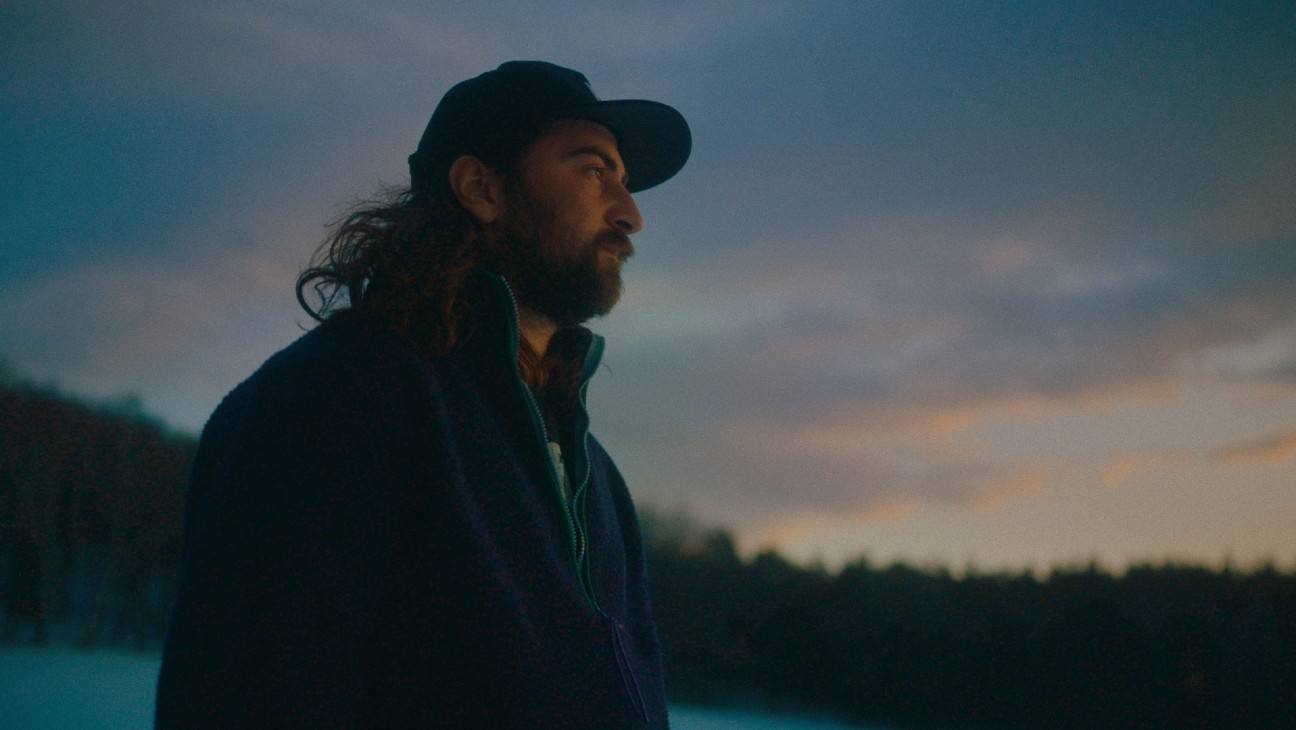
Image Credit: Courtesy of Netflix
This five-minute track is a delightful choice to end The Great Divide. The album takes listeners on a roller coaster of emotions, but Kahan closes this chapter on a nostalgic-laced ode to his friend. It’s exactly the type of song you’d conjure in your head looking at the album’s main artwork.
“Dan” is another lyrical standout on an album of standout lyrics. “You’re appealing to the parts that you know I hold dear / You’ve been the best five minutes of a shitty whole year” is a highlight, but Kahan saves the best for last.
“Everybody’s asleep, let’s talk about it / Let’s talk about high school and talk about death,” he sings to close out The Great Divide. “Before the moment tries to disappear / Don’t the sky look pretty up here?”