

Get the latest entertainment news, reviews and star-studded interviews with our Independent Culture emailGet the latest entertainment news with our free Culture newsletter Get the latest entertainment news with our free Culture newsletter
Javier Bardem has claimed he’s faced “professional punishment” due to his outspoken support for Palestine.
The Spanish actor, 57, is among the most vocal celebrity activists for Gaza amid the war with Israel.
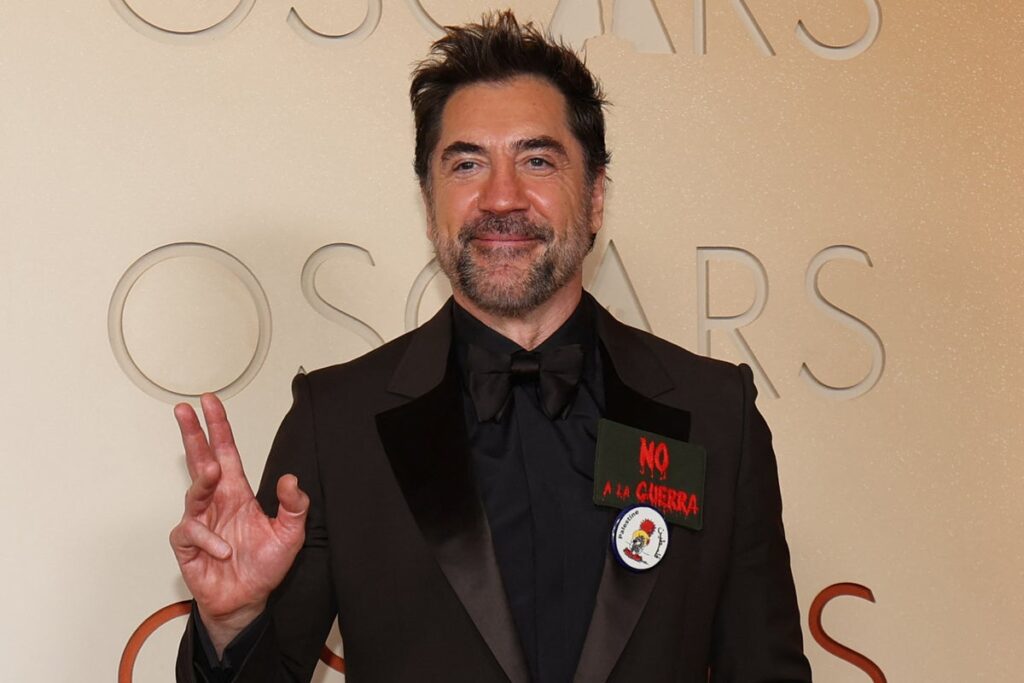
At the 2026 Oscars in March, Bardem wore an anti-war patch and a pro-Palestine pin on his suit. “No to war and free Palestine,” he declared before presenting the award for Best International Feature Film, alongside Priyanka Chopra.
Speaking to Variety in a new interview, the Oscar-winning No Country for Old Men star said that, like Susan Sarandon — who in February said it’s been “impossible” for her to even find television roles after her participation in a pro-Palestine rally in 2023 — he, too, has lost out on jobs because of his stance.
“Yes, I’ve heard things: ‘They were going to call you about that project, but that’s gone’. ‘Or this brand was going to ask you to do the campaign, but they cannot’,” Bardem said. “It’s fine. I live in Spain. American studios are not the only place.”
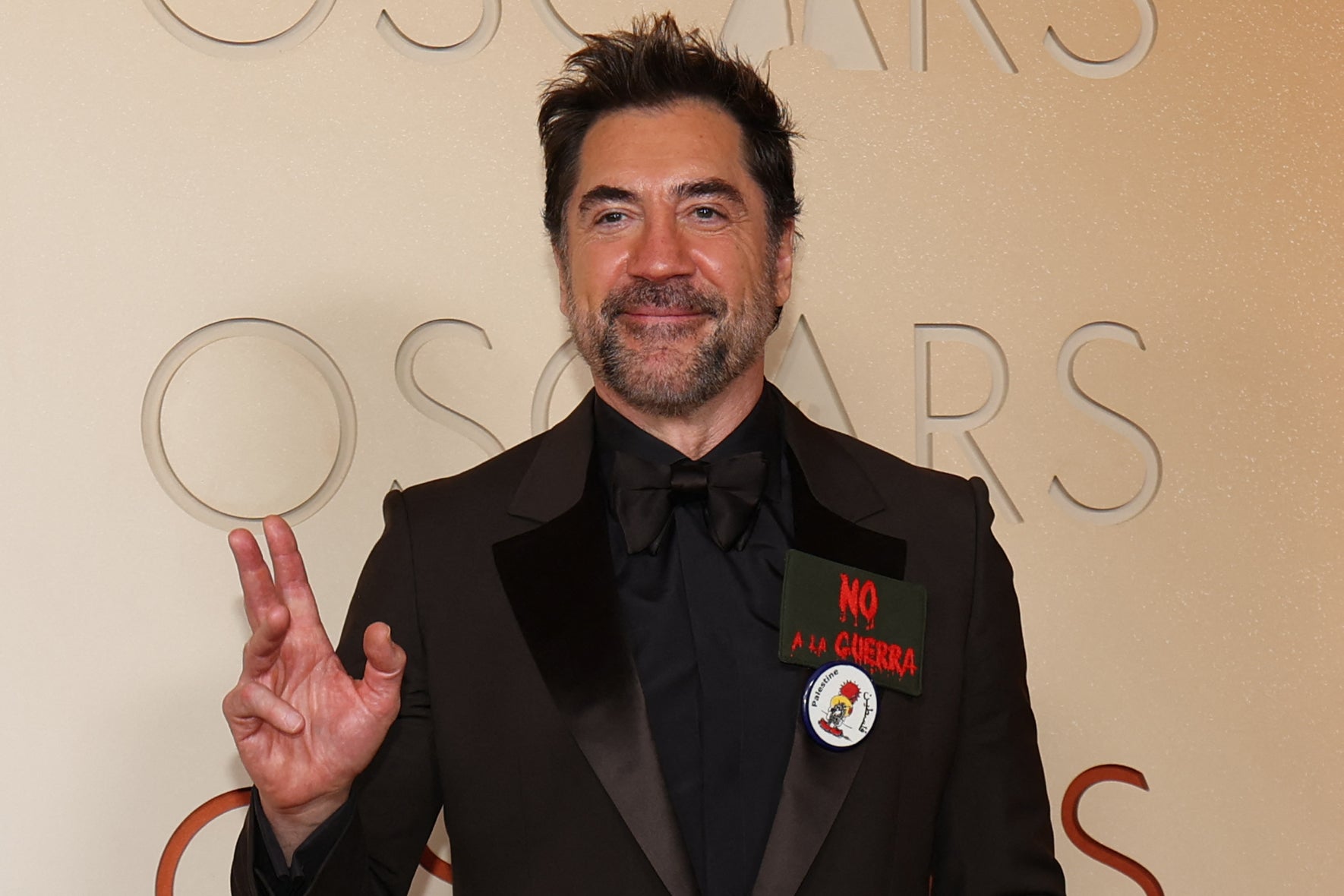 Javier Bardem wore an anti-war patch and a pro-Palestine pin to the 2026 Oscars (AFP/Getty)
Of Sarandon’s Hollywood exile, the Dune actor added: “That tells you how wrong this whole system is. She was one of the first ones to go there. And then she got that professional punishment.
“Some people will put you on a blacklist,” Bardem said. “I cannot tell you if that’s true or not — I don’t have the facts. What I do have the facts about are the new people that are calling you because they want you in their project. That makes me feel that the narrative that they’ve been using for so long is changing.”
Admitting that he had originally expected his Oscar remarks to be booed, he said he instead received “an ovation.”
Following the 98th Academy Awards, Bardem stopped to talk with The Independent’s Caitlin Hornik on the red carpet of the Vanity Fair Oscar Party.

Watch Apple TV+ free for 7 day
New subscribers only. £9.99/mo. after free trial. Plan auto-renews until cancelled.
Try for free
ADVERTISEMENT. If you sign up to this service we will earn commission. This revenue helps to fund journalism across The Independent.
Watch Apple TV+ free for 7 day
New subscribers only. £9.99/mo. after free trial. Plan auto-renews until cancelled.
Try for free
ADVERTISEMENT. If you sign up to this service we will earn commission. This revenue helps to fund journalism across The Independent.
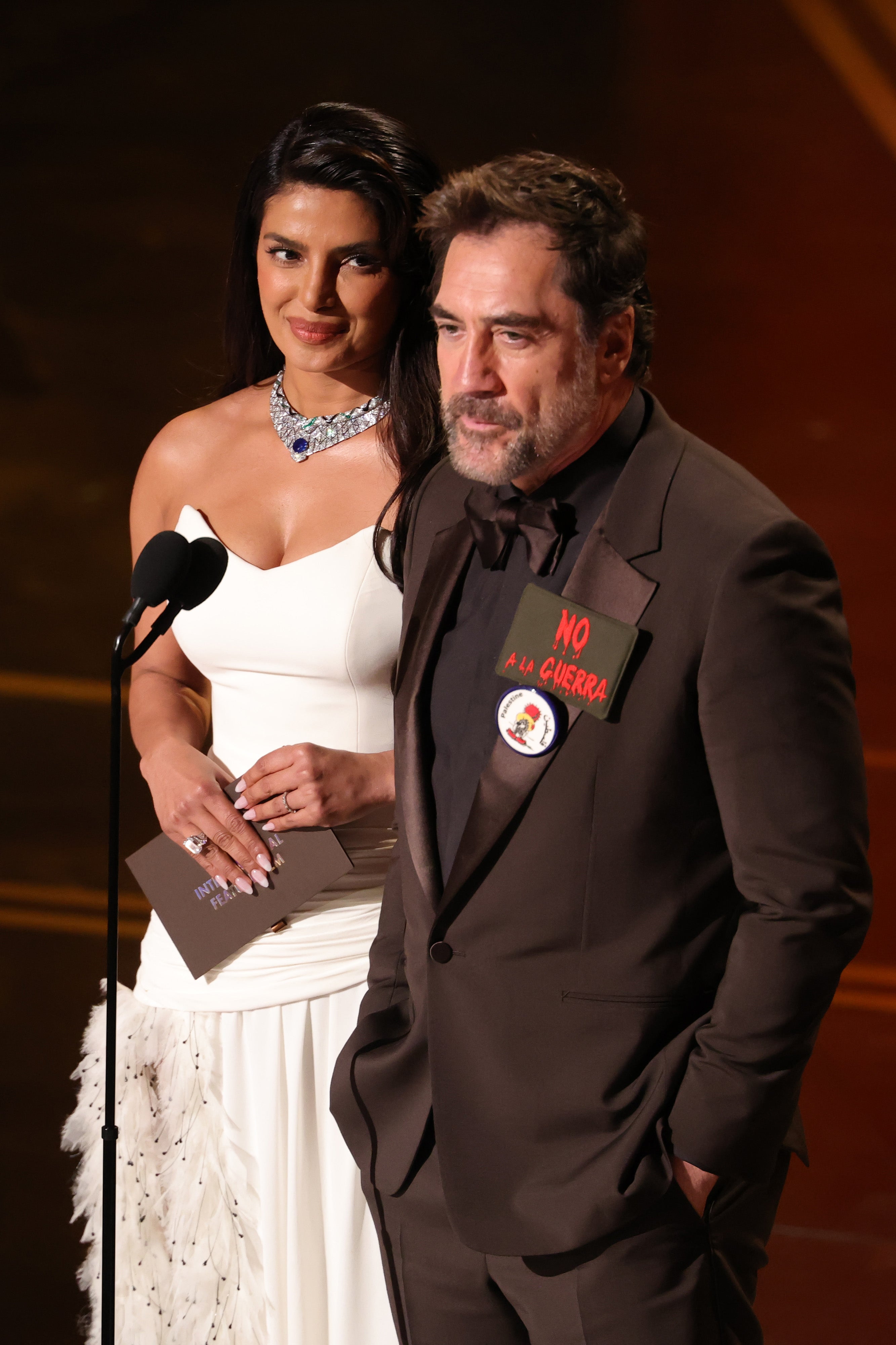 Bardem was joined by Priyanka Chopra to present the 2026 Oscar for Best International Feature Film (Getty)
Suggesting that his Hollywood peers were too “comfortable” to speak out, he said: “I think they don’t want to feel, themselves, uncomfortable. And that makes me uncomfortable; me and many others.
“When I said ‘free Palestine’ in the room, in that theatre, the room broke [out] in a round of applause. So there is support, there is a lot of people supporting it, but it’s not loud enough,” Bardem acknowledged. “That’s what I try to inspire. Like, ‘Guys, it’s OK. You can be part of the community of filmmaking, and also be a citizen, and it’s OK.’ One thing should be OK with the other.”
Bardem and Sarandon aren’t the only actors to face professional repercussions over their unwavering support for Palestine.
In 2023, Melissa Barrera was fired from Scream 7 after she made a series of Instagram posts denouncing Israeli prime minister Benjamin Netanyahu and his regime’s response to the October 7 atrocities perpetrated by Hamas.
“We have zero tolerance for antisemitism or the incitement of hate in any form, including false references to genocide, ethnic cleansing, Holocaust distortion or anything that flagrantly crosses the line into hate speech,” the film’s production studio, Spyglass, said in a statement at the time.
“It was the darkest and hardest year of my life, and I had to reevaluate everything,” Barrera told The Independent in 2024 about the aftermath of her dismissal. “There were times where I felt like my life was over,” she recalled. “It was quiet for, like, 10 months. I was still getting offers for small things here and there — I’m not going to lie and say there was nothing — but [the message] was, like, ‘Oh, she probably doesn’t have work, she’ll say yes to anything’.”